





Updated in July 2026 with the latest information.
Open your fridge right now. What’s hiding in the bottom of the crisper? If you said “slimy lettuce” or “mystery mush”, I hear you!
Every time those sad greens hit the bin, so does your money. And the truth is that, for most households, that is hundreds of dollars each year. Based on Australian food-waste figures, the average household could be tossing out around $840 worth of fruit and vegetables annually — and most of us do not even realise it.
Here is the simple hack thousands of households are already using to keep their vegetables crisp for weeks, cut mid-week takeaway and save serious cash!
How can you keep vegetables fresh for longer?
The quick answer: vegetables last longer when they have the right balance of hydration, airflow and temperature. Excess condensation encourages sliminess, while dry fridge air causes produce to wilt and shrivel.
For many vegetables, storing them in a slightly damp, breathable cotton produce bag inside the crisper helps regulate moisture without sealing them inside plastic. Leafy greens, herbs, carrots, broccoli and cucumbers can often remain usable for substantially longer when stored this way.
Recognise these common food fails?
🥬 Slimy spinach stuck to the plastic bag
🥕 Rubbery carrots that bend instead of snap
🥦 Yellowing broccoli florets
🌱 Herbs going black in their plastic sleeve
🥗 Bagged salad turning to soup
🥒 Wrinkled cucumbers that are mushy inside
🥔 Shriveled or green potatoes
🫑 Half a capsicum sweating in cling wrap
🍆 Eggplant developing soft black spots
🍄 Mushrooms turning into dried shiitake
You would not be alone. Together, these small food failures add up to a huge waste of food and money.
Why fresh produce spoils so quickly at home
It is not your imagination — fruit and vegetables really do seem to die faster once they hit the fridge. That is because produce is still alive after it is picked. It keeps breathing, releasing moisture and undergoing the natural processes that lead to ripening and, eventually, decay.
Plastic can make the problem worse by trapping humidity, so greens turn slimy while carrots shrivel. Add fridge temperature swings and ethylene gas released by fruit such as apples and bananas, and you have the perfect recipe for bendy carrots, yellowing broccoli and soggy herbs.
What is ethylene gas?
Ethylene is a naturally occurring plant hormone released by many fruits and vegetables. It helps produce ripen, but it can also speed up ageing and spoilage in sensitive vegetables stored nearby.
Apples, bananas, pears, avocados, peaches and tomatoes are among the produce items that can release ethylene as they ripen. Leafy greens, broccoli, cucumbers and herbs may deteriorate more quickly when stored very close to them.
Practical fridge tip:
Where possible, keep ripening fruit separate from delicate leafy vegetables and herbs. You do not need a perfect laboratory setup — using separate crisper areas or storage bags can help.
How to keep vegetables fresh longer without plastic
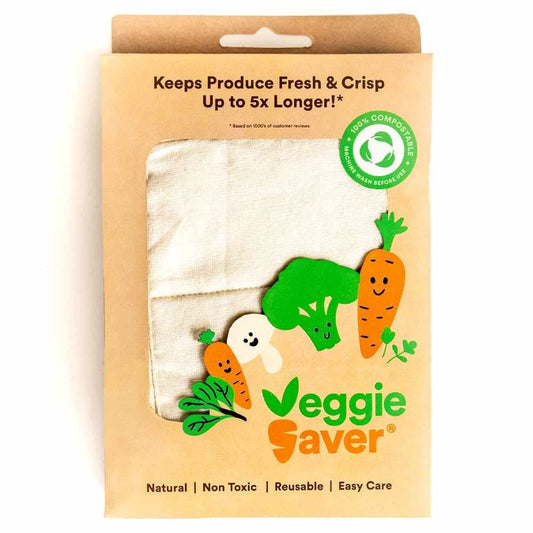
That is where the Veggie Saver comes in. It is not just another bag — it is a breathable cotton sidekick that creates the right environment to keep many types of produce fresh for two weeks or more.
How to use a Veggie Saver Swag bag
- Wash the bag before first use according to its care instructions.
- Wash or prepare your vegetables if you prefer having them ready to eat, then remove excess surface water.
- Dampen the bag under the tap and wring it out so it is moist rather than dripping wet.
- Place suitable produce inside and store the bag in the refrigerator crisper.
- Check the bag every few days and briefly re-dampen it when it begins to dry.
- Use a dry bag for mushrooms and for suitable pantry produce such as potatoes or onions.
- Wash the bag regularly and remove any spoiled produce promptly.
Here is what that means in our house
- Lettuce, rocket, kale and spinach last across two weeks instead of just a few days. I wash them first before putting them in the damp bag, leaving them ready for everyone to grab some whenever needed — just like bagged convenience salad, but without the plastic.
- Herbs from the supermarket look better after a few days than they did when I bought them!
- Parsley and other suitable herbs picked from my garden stay sprightly for weeks.
- Cut fruit and vegetables last without plastic cling wrap.
- Perfect mushrooms for a week or more, kept in a dry Veggie Saver bag in the crisper.
- Potatoes and onions stay firm and happy in the pantry, rather than sprouting or shrivelling as quickly.
- Mid-week dinners happen because the vegetables are still good to use!
AMAZING!
These are genius – I'm a shocker for getting around to cooking and these things literally give me extra weeks! Highly recommend.
– Jen
```Veggie Saver works!
Definitely works well — provided more time to use things bought with plans to cook on weekend that had to be delayed for a week or two.
– Barbara
```
Why a Veggie Saver works differently from a plastic bag
Plastic traps moisture and gases and creates the perfect conditions for slimy lettuce and black, soggy herbs.
Veggie Saver works differently. Its natural cotton layers allow your produce to breathe while staying hydrated, but not drenched. It is like giving your crisper a microclimate that mimics nature — fresh, balanced and long-lasting.
The goal is not simply to make vegetables wet. It is to reduce extremes by protecting produce from the fridge's drying airflow while allowing excess moisture to move away from the surface.
- The cotton helps hold moisture around vegetables that would otherwise wilt in dry fridge air.
- The breathable fabric allows airflow rather than tightly sealing produce inside plastic.
- Moisture is distributed through the fabric instead of collecting as large droplets against a plastic surface.
- The reusable bag protects loose produce while helping keep the crisper organised.
- Disposable plastic packaging is reduced because one washable bag can be used repeatedly.
For most produce kept in the fridge, you simply keep the bag moist at all times. This usually means briefly running it under the tap every few days and wringing out excess water.
For mushrooms and suitable root vegetables kept in the pantry, keep the bag dry.
Plastic bag versus breathable cotton storage
| Storage method | Moisture control | Airflow | Waste considerations |
|---|---|---|---|
| Sealed plastic bag | May trap condensation directly against produce. | Very limited. | Often single-use or difficult to reuse hygienically. |
| Produce left loose | May dry out quickly in circulating fridge air. | High. | No additional packaging, but produce may wilt sooner. |
| Breathable damp cotton bag | Helps retain hydration while dispersing excess moisture. | Moderate and breathable. | Reusable and washable, with no disposable bag required. |
📦 How we figured out the “$840 a year” food-waste bill
Quick maths:
- Australians toss out an estimated $19.3 billion worth of food each year, according to Australia Institute research published in 2023.
- Research indicates that fruit and vegetables account for a substantial proportion of avoidable household food waste, with one study estimating approximately 48% by weight.
- Applying 48% to $19.3 billion gives an indicative total of approximately $9.26 billion in wasted produce.
- Spread across approximately 11.1 million Australian households, this equates to roughly $834 per household each year, rounded to around $840.
Important: this is an indicative estimate, not a guaranteed saving for every household.
Still thinking, “Surely not us”? OzHarvest's Half Eaten research found that vegetables were among the foods most commonly wasted by Australian households, with fruit not far behind. OzHarvest's household food-waste research.
Which vegetables benefit most from breathable storage?
This method is especially useful for produce that either wilts quickly in dry air or deteriorates when trapped against excess condensation.
| Produce | Common problem | Suggested storage approach |
|---|---|---|
| Lettuce and leafy greens | Wilting, sliminess and damaged leaves. | Store in a clean, damp breathable bag in the crisper. Remove damaged leaves first. |
| Carrots | Becoming rubbery or limp. | Keep cool and hydrated in a damp bag. |
| Broccoli | Yellowing florets and dry stems. | Store cool in a damp bag and keep away from strongly ethylene-producing fruit. |
| Fresh herbs | Blackened leaves, wilting and slimy stems. | Remove damaged leaves and store suitable herbs in a lightly damp bag. |
| Cucumbers | Wrinkling, soft spots and internal mushiness. | Store in the crisper with protection from drying airflow. |
| Capsicum | Wrinkling and condensation around cut edges. | Keep whole or cut capsicum in a clean breathable storage bag. |
| Mushrooms | Becoming slimy in plastic or drying out when loose. | Use a clean, dry breathable bag rather than a damp one. |
| Potatoes and onions | Sprouting, shrivelling or developing soft areas. | Store dry in a cool, dark and ventilated pantry. Keep potatoes and onions separated where practical. |
Should you wash vegetables before storing them?
There is no single answer for every type of produce.
I often wash leafy greens before placing them in the Veggie Saver because it makes them convenient to use throughout the week. The important part is to remove excess surface water before storage. Produce should be hydrated, not sitting in pools of water.
For delicate berries, mushrooms and produce that bruises easily, waiting until shortly before use may be preferable. Always remove damaged or mouldy pieces promptly because spoilage can spread to neighbouring produce.
A useful rule:
If you wash produce before storing it, drain it thoroughly and ensure the storage bag is clean. A damp cotton bag should feel moist, not saturated.
Who is this fridge hack particularly useful for?
A reusable produce-saving bag can be especially helpful if you:
- shop for groceries once a week or less often
- live alone and struggle to finish whole bunches of vegetables
- buy organic or premium produce and hate seeing it wasted
- grow herbs or vegetables at home
- prepare lunches and dinners ahead of time
- regularly discover forgotten vegetables in the crisper
- want to reduce disposable plastic in your kitchen
- are trying to save money on groceries
- want vegetables ready for quick mid-week meals
Save money and reduce food waste at home
Here is the best part: Veggie Saver can potentially pay for itself quickly by helping you use produce that might otherwise be thrown away.
For some households, preventing only a few bags of salad, bunches of herbs, cucumbers or forgotten carrots from spoiling may recover the purchase price within weeks. After that, it just keeps giving — and for many people that could be $800 or more each year saved from produce that does not go to waste.
That is less money in the bin, fewer stressful mid-week supermarket runs and more meals made from what you already have.
And it is not just about saving money. Keeping food fresh for longer also reduces the resources embedded in every item of produce, including the land, water, energy, transport, refrigeration and labour needed to grow and deliver it.
Rather than tossing your precious cash into the crisper, you have to try this ridiculously simple hack for preserving your produce.
Everyone we know who has given them a go cannot believe the difference they make and loves using them. But most of all, they love pocketing the savings instead of letting their money rot in the fridge!
Excellent solution
Does a fantastic job of keeping my carrots, cucumbers and herbs fresh for a couple of weeks. Saved my money back pretty quickly!
– Sean
```Money Saver
I bought two of the Veggie Saver — one for vegetables and the other for fruit. Keeps the crisper drawers tidy, no more plastic bags. Your fruit and veggies last for weeks, no more wastage. Highly recommend this product.
– Elizabeth
```Frequently asked questions
How do I stop lettuce from going slimy?
Remove damaged leaves, wash the lettuce if desired and drain it thoroughly. Store it in a clean, lightly damp breathable bag in the crisper rather than sealing it against wet plastic. Check it regularly and remove any deteriorating leaves before they affect the rest. The bag should remain moist, but neither the lettuce nor the bag should be dripping wet.
Why do carrots become rubbery in the fridge?
Carrots become rubbery when they lose moisture. Cold circulating air inside the fridge can gradually dehydrate them, especially when they are stored loose. A damp breathable bag helps create a more humid environment around the carrots while still allowing airflow.
Do reusable produce bags actually keep vegetables fresh?
The results depend on the bag material, how it is used and the type and condition of the produce. A damp breathable cotton bag can help vegetables that need hydration and airflow by reducing exposure to dry fridge air without tightly sealing them inside plastic.
It will not reverse existing spoilage, so begin with fresh produce and remove damaged pieces promptly.
How often should I wet a Veggie Saver bag?
Check the bag every few days. When it begins to feel dry, briefly run it under the tap and wring out the excess water before returning it to the crisper.
How often it needs re-dampening will depend on your refrigerator, the amount of produce in the bag and how frequently the fridge is opened.
Should the Veggie Saver bag be soaking wet?
No. The bag should generally be damp rather than dripping. Excess standing water can encourage deterioration in some produce. Wet the bag, wring it out and ensure freshly washed vegetables have drained before placing them inside.
Can I store mushrooms in a Veggie Saver?
Yes, but mushrooms should generally be stored in a clean, dry Veggie Saver bag rather than a damp one. The breathable material helps avoid the heavy condensation that can form inside plastic. Check them regularly and remove any mushrooms showing signs of spoilage.
Can I store cut vegetables without cling wrap?
Many cut vegetables can be placed inside a clean reusable produce bag or suitable reusable container instead of being individually wrapped in cling film.
Keep cut produce refrigerated and use it promptly. Storage time will vary depending on the vegetable, how it was cut and its freshness when stored.
Can potatoes and onions go inside the same bag?
It is generally preferable to store potatoes and onions separately. Both should be kept dry in a cool, dark and ventilated place, but onions can contribute to conditions that encourage potatoes to sprout or deteriorate more quickly.
Do not use a damp fridge-storage method for pantry potatoes and onions.
Which fruits produce ethylene gas?
Common ethylene-producing fruits include apples, bananas, pears, avocados, peaches and tomatoes. The amount released varies with the type of produce and its stage of ripeness.
Keeping ripening fruit separate from sensitive vegetables such as leafy greens, broccoli, cucumber and herbs can help slow deterioration.
How long will vegetables last in a Veggie Saver?
There is no guaranteed storage period because freshness depends on the vegetable, its condition when purchased, fridge temperature, handling and how the bag is maintained.
Many customers report keeping suitable produce fresh for one to two weeks or longer, but vegetables should always be checked before eating.
Does this fridge hack really save $800 a year?
The $800-plus figure is an indicative estimate based on national food-waste expenditure and the proportion attributed to fruit and vegetables. It is not a guaranteed saving.
A household that already wastes very little produce will save less, while a household frequently throwing away vegetables may have greater potential to reduce grocery waste.
How should I wash a reusable cotton produce bag?
Follow the care directions supplied with the bag. Regular washing is important, particularly after storing cut produce or vegetables with soil attached.
Allow the bag to dry appropriately between uses when it is not being kept damp for active fridge storage.
Ready to rescue your vegetables from the crisper?
Keep more of the fresh food you buy, reduce disposable plastic and make mid-week meals easier.
Shop Veggie Saver Bags at Biome
Related reads
How to keep vegetables fresh longer when you live alone
What to do with vegetable scraps
Sources and calculation note: The potential household saving discussed in this article is an illustrative estimate derived from Australian national food-waste expenditure, household numbers and research into the proportion of avoidable household food waste made up of fruit and vegetables. It is not a promise or guarantee of individual savings.