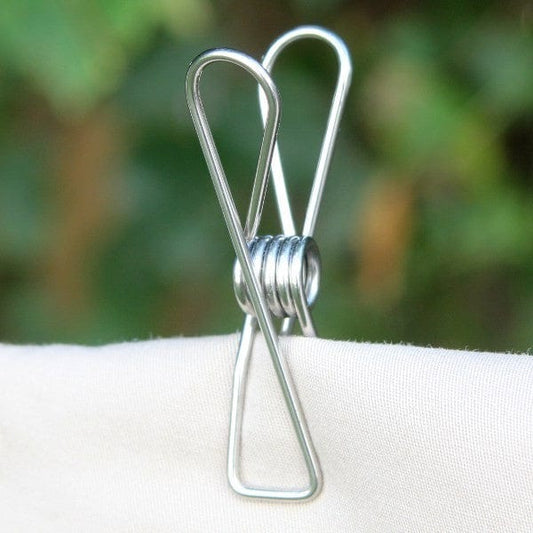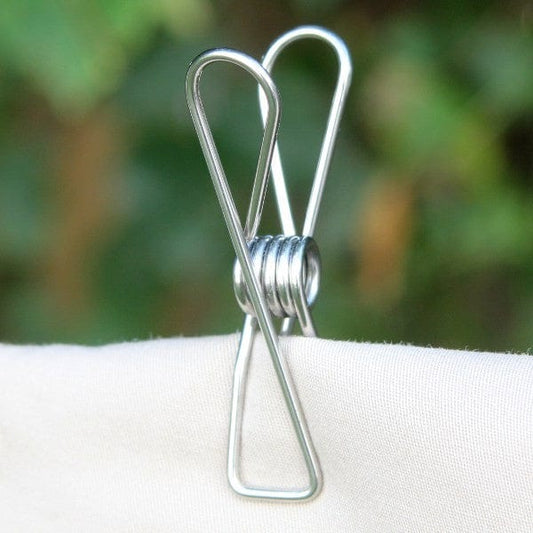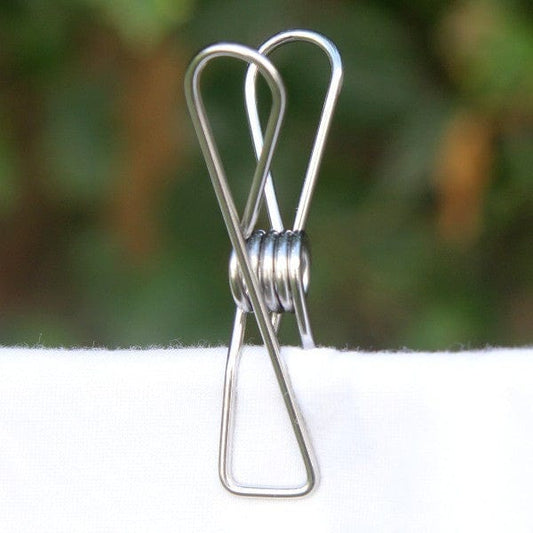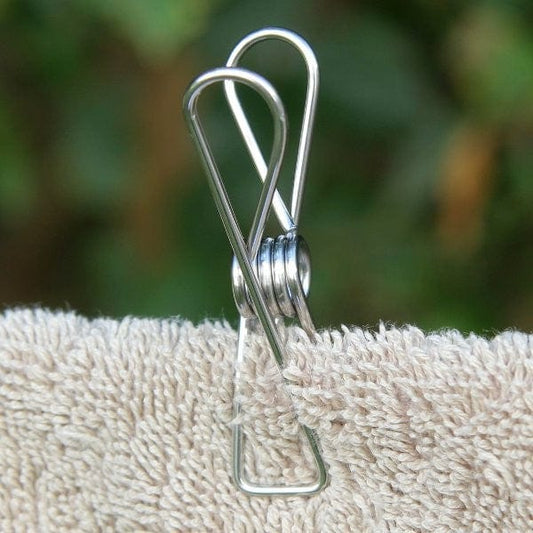






Quick answer: Which stainless steel peg should you buy?
- Near the coast? → Choose 316 marine grade
- Most Australian homes? → 304 grade is ideal
- Budget option? → 201 grade works well inland & not left on line
- Windy clothesline? → Choose thicker 2mm wire pegs
- Arthritic hands? → Choose easy-squeeze or long pegs
For more than a decade, Biome has helped Australians choose stainless steel pegs that survive harsh UV, coastal air, strong wind and heavy laundry.
After years of customer feedback and testing different grades, one thing consistently stands out:
quality stainless steel pegs dramatically outlast plastic pegs in Australian conditions.
Why stainless steel pegs last longer than plastic pegs
Australia is particularly harsh on plastic clothes pegs.
UV exposure, heat and weather slowly make many plastic pegs brittle until they crack, shatter or lose tension, then end up in the rubbish.
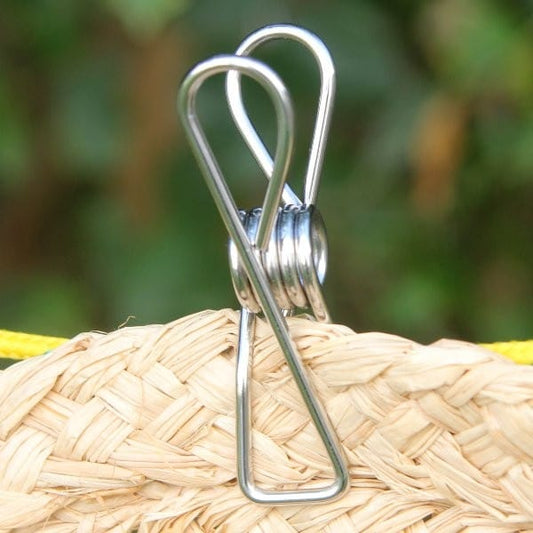
Stainless steel pegs solve many of these problems because:
- they do not become brittle in UV
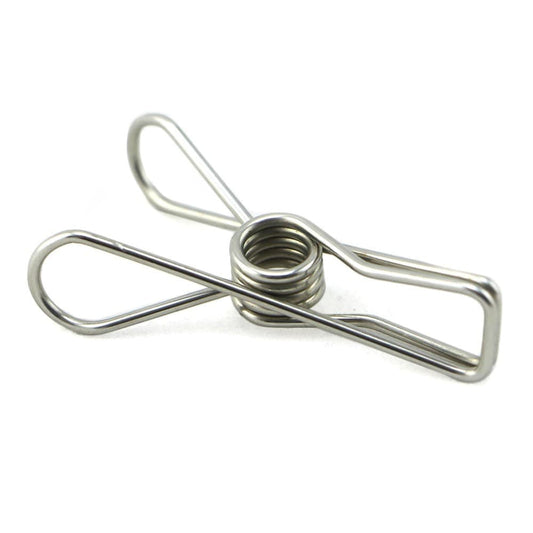
- they contain no plastic springs or hinges
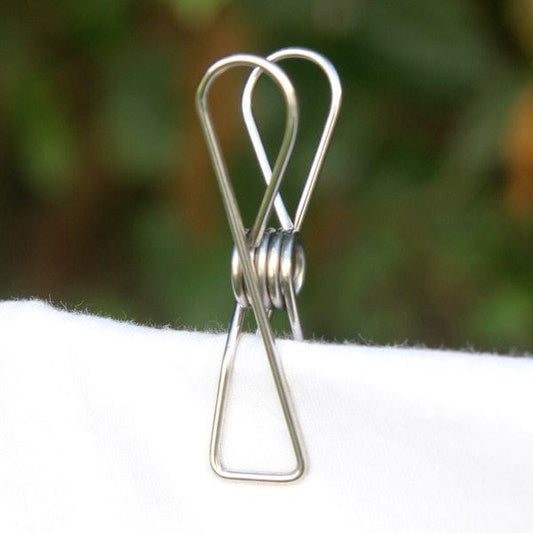
- made from a single continuous piece of wire
- quality stainless steel resists corrosion
- they are much stronger than plastic, especially for heavy items
Many customers tell us stainless steel pegs are one of those simple household swaps they wish they had made earlier.
What actually matters when buying stainless steel pegs
Many stainless steel pegs look similar online. But after years of customer feedback, we’ve found the most important differences are:
1. Stainless steel grade
This determines corrosion resistance.
201 Grade
Best for:
- inland homes
- undercover storage (not left on the line)
- budget-conscious households
304 Grade
Thanks to a higher nickel content, 304 grade has stronger rust resistance and durability than standard 201 stainless steel. Biome founder Tracey has left her 304 pegs outside in Brisbane for 10 years with no sign of rust.
Best for:
- general Australian outdoor use
- humidity and rain exposure
- leaving pegs outside occasionally
316 Marine Grade
316 marine grade contains molybdenum, which improves corrosion resistance in salty conditions.
Best for:
- coastal homes
- salty air
- boats
- permanent outdoor exposure
If you live near the ocean, 316 marine grade is usually worth the extra cost.
Browse Biome’s full range of stainless steel pegs including 201, 304 and marine-grade 316 options for coastal homes, windy conditions and heavy laundry.
Why 316 marine grade pegs are best near the coast

The most common problem we see is customers unknowingly buying low-grade stainless pegs for coastal conditions, particularly on marketplaces.
But coastal environments are extremely corrosive. Salt air can eventually cause lower stainless steel grades to pit, stain or rust — especially if pegs remain outdoors continuously. If you want to learn more about why this happens, read our guide Why some stainless steel pegs rust.
That is why we consistently recommend:
- 316 near the coast
- 304 for most inland Australian homes
- 201 for sheltered everyday use away from the coast
Wire thickness matters more than people realise
One of the biggest differences between stainless steel pegs is wire thickness.
Thicker wire generally means:
- stronger grip
- better wind resistance
- better performance with heavy laundry
Thinner wire generally means:
- easier squeezing for everyone
- better for arthritis or weak grip
- lighter handling
Through customer feedback over many years, we’ve found:
- around 1.5mm wire works well for easy-squeeze pegs
- around 1.7mm is a good everyday balance
- 2mm to 2.3mm performs best in strong wind and for heavy laundry
The best peg types for different Australian conditions
Best pegs for coastal homes or living near the ocean
Choose:
✔ 316 marine grade
Best for:
- Salty air
- humid climates
- leaving pegs outdoors
Recommended options:
- Regular 316 marine grade pegs
- Easy squeeze 316 pegs
- Windy conditions 316 pegs
- Very long 316 pegs : easier to grip and open
Best pegs for windy clotheslines
Choose:
✔ thicker wire pegs (around 2mm) with extra grip
Best for:
- apartment balconies
- exposed clotheslines
- storm-prone areas
- cockatoos stealing pegs off the line
Recommended options
- 316 grade windy pegs
- 304 grade windy pegs
- 201 grade windy pegs
- Largest and strongest peg in 201 or 304

Best pegs for heavy laundry
Choose:
✔ largest and strongest peg sizes.
Best for:
- doonas
- towels
- bath mats
- blankets
Recommended options
Best pegs for arthritic hands
Choose:
✔ easy squeeze or long-handle pegs
Best for:
- reduced hand strength or weak grip
- arthritis or sensitive joints
- easier opening leverage
Recommended options:
Best pegs for leaving on the line (except near the coast)
Choose:
✔ any of the 304 grade sizes
Recommended options:
Here’s a quick comparison of which stainless steel peg types we recommend for different Australian conditions and household needs.
| Australian Situation | Recommended Grade | Recommended Peg Style |
|---|---|---|
| Coastal homes | 316 marine grade | Marine-grade outdoor pegs |
| Everyday inland use | 304 | Regular everyday pegs |
| Budget option | 201 | Standard indoor/outdoor pegs |
| Windy conditions | 304 or 316 | Thick wire windy-condition pegs |
| Arthritic hands | 201 or 316 | Easy-squeeze or long pegs |
| Heavy laundry | 304 or 316 | Largest heavy-duty pegs |
Related expert guides
- Why some stainless steel pegs rust
- Best pegs for windy weather
- Are stainless steel pegs any good for Australian weather?
- 10 reasons to swap plastic pegs for stainless steel pegs
What makes one-piece wire pegs better
One of the simplest but most important design features is whether the peg is made from one continuous piece of wire or multiple joined components.
Single-piece wire pegs are less likely to:
- rust at the welded connection points
- break apart
- lose springs
This design simplicity is one reason stainless steel wire pegs often last dramatically longer than plastic pegs.
Do stainless steel pegs actually get hot?
This is one of the most common questions we receive. Surprisingly, most quality wire pegs stay comfortable to touch even in hot Australian weather.
Because the wire is thin:
- it does not retain large amounts of heat
- airflow cools it quickly
- reflective stainless steel helps reduce heat absorption
Biome founder Tracey Bailey even tested this personally by heating a wire peg to approximately 50°C in her oven and found it cooled extremely quickly once handled.
Why customers rarely go back to plastic pegs
Many customers tell us they never return to plastic pegs after switching. They may hesitate because stainless steel pegs cost more upfront. But over time, constantly replacing cheap plastic pegs often becomes more expensive.
“No more broken plastic pegs”
"Great long lasting product. In our house they also double up as small clamps and food bag closers."
— Rebecca C.
“Easy on arthritic hands”
"They're still plenty secure on the line and nice and easy on my mum's arthritic thumbs."
— Talara
“Cocky proof!”
One customer even described them as “cocky proof” after local cockatoos gave up trying to steal them off the line!!
During the wild storms in South East Queensland, another customer captured this footage of their washing staying firmly on the line despite the tornado-like winds. Watch the storm footage here →

How we recommend pegs
Biome has sold stainless steel pegs in Australia for 10 years.
Our recommendations are based on:
- long-term customer feedback
- testing across Australian climate conditions
- corrosion performance
- grip strength
- accessibility needs
- real-world coastal use
The biggest mistake we see is people buying very cheap “stainless” pegs without knowing the steel grade. The grade matters enormously in Australian conditions.
Originally published 2023. Updated 2026.
FAQs
Are stainless steel pegs worth the money?
Usually yes. Although they cost more upfront, quality stainless steel pegs can last many years longer than plastic alternatives.
Do stainless steel pegs rust?
Some lower grades can eventually corrode in salty environments. Genuine 316 marine grade offers the best corrosion resistance.
Which stainless steel peg is best near the ocean?
316 marine grade. Customers near the Queensland coast consistently report better long-term results with genuine 316 marine grade compared with cheaper unlabelled stainless pegs.
Do metal pegs leave marks on clothes?
One surprising piece of customer feedback over the years is that stainless steel pegs are often gentler on clothes than bulky plastic pegs because the thinner wire creates smaller pressure marks.
What thickness wire peg is best?
Around:
- 1.7mm for general use
- 2mm for windy conditions
- 1.5mm for easier squeezing
About the author
Tracey Bailey is the founder of Biome, one of Australia’s longest-running sustainable living stores. Biome has specialised in low-waste, plastic-free household alternatives for more than 20 years, including stainless steel wire pegs designed for Australian conditions.