





Do you dislike entering a bathroom that's just been cleaned with chlorine bleach or ammonia? Your lungs constrict from breathing in the fumes and you want to leave as quickly as possible.
Oxygen bleach is a safer, more versatile alternative to chlorine bleach for cleaning and laundry.
It removes stains, brightens fabrics, and cleans surfaces — without the harsh fumes or corrosive effects associated with traditional bleach.
If you’re using a simple, pure oxygen bleach (like this one), these methods are easy to follow and work across multiple areas of the home.
Here’s how it works, how it compares to chlorine bleach, and how to use it effectively at home.
What is chlorine bleach?
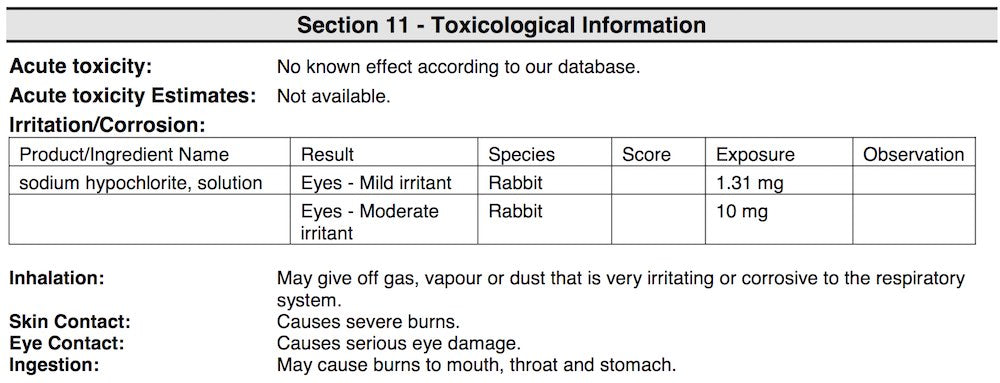
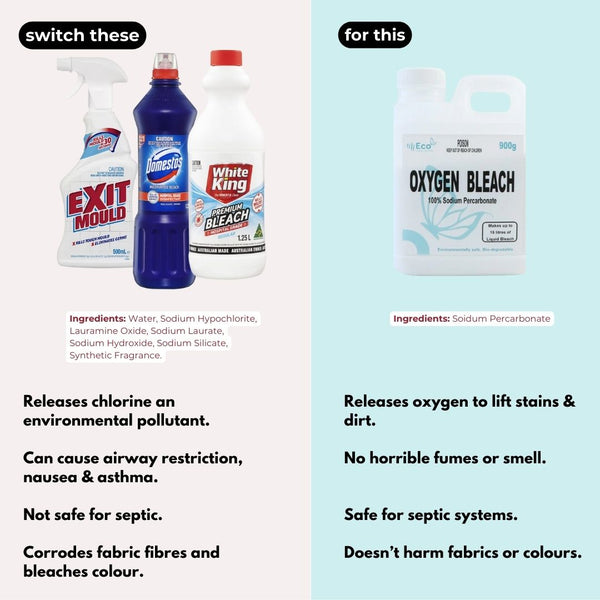
Household chlorine bleach products, for example Exit Mould, Domestos and White King, are a mixture of synthetic chemicals with the main ingredient being sodium hypochlorite.
Chlorine is used across a wide range of industrial and consumer products — from PVC to water treatment — but at the concentrations found in household cleaners, it can be harmful to health.
How is chlorine bleach harmful?
Chlorine bleach is harmful if you splash it on your skin, accidentally drink it, or inhale it.
A 30-year study by Harvard University found that people who used bleach and other common disinfectants once a week had a 32% increased risk of developing fatal lung disease.
Exposure to chlorine can also cause airway constriction, with symptoms similar to asthma — including coughing, wheezing and fatigue.
Mixing bleach with other cleaning products can also create toxic gases. For example:
- Bleach + ammonia → chloramine gas
- Bleach + acids → chlorine gas
- Bleach + alcohol → chloroform
These reactions carry serious health risks, which is why bleach should never be mixed with other cleaners.
What is oxygen bleach?
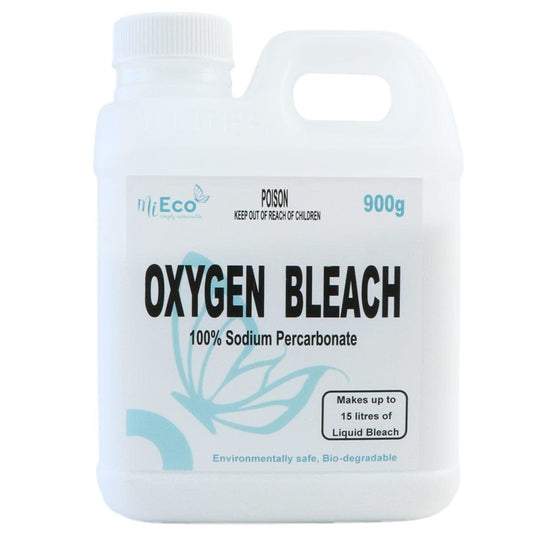
Oxygen bleach (sodium percarbonate) releases oxygen in water to lift stains and dirt.
This simple reaction is what makes it such an effective natural stain remover across laundry, grout, and general surfaces.
Why oxygen bleach is better than chlorine bleach
1. Safer for your health
The risks associated with chlorine bleach are significant. While you should still use care with oxygen bleach (avoid contact with eyes, wear gloves if needed), it does not produce the same harsh fumes or toxic reactions.
2. Safer for the environment
Sodium percarbonate breaks down into oxygen, water and soda ash when it comes into contact with water. It contains no phosphorous or nitrogen and is considered biodegradable and septic safe.
Other commercial bleach type products have also been tested on animals (Exit Mould ingredients are tested on rabbits as per the excerpt of MSDS for Exit Mould at the end).
3. A simple, single ingredient
Liquid chlorine bleach products are diluted with additional chemicals such as surfactants, stabilisers, and fragrance.
In contrast, a pure oxygen bleach is much simpler.
A product that is 100% sodium percarbonate — with no fillers, SLS, fragrance or preservatives — gives you the full cleaning strength without unnecessary additives.
This is the kind of formulation we use and recommend for both cleaning and laundry.
4. Gentler on fabrics
Oxygen bleach will not break down fabric fibres in the same way chlorine bleach can.
It’s still not suitable for delicate fabrics like silk or wool, but it is much safer for everyday clothing.
5. Safe on colours
Oxygen bleach is generally safe to use on coloured fabrics and won’t strip dye in the same way chlorine bleach can (though patch testing is always recommended).
6. More flexible to use
Oxygen bleach can be used alongside other cleaning products.
For example:
- added to laundry for a brightening boost
- combined with washing soda or bi carb
- used across multiple cleaning tasks in the home
Many people come to oxygen bleach after trying harsher cleaners without success — particularly for stains, laundry and grout.
“Used it to clean stained grout and it came up beautifully.”
“This worked great on my poor old tile grout.”
How to use oxygen bleach for cleaning and laundry
For all your green cleaning needs, oxygen bleach needs to be mixed with water to activate. It dissolves more quickly in warm or hot water, but can still be used in cold water.
Once mixed, do not leave in a sealed container as it continues to release oxygen and may burst!
Common uses include: stain removal, laundry whitening, musty towels, grout cleaning, mould treatment, water bottles, tea cups, drains and general surface cleaning.
⚠️ It is always best to patch test first.

Stain removal / laundry pre-soaker
Dissolve 1/4 to 3/4 cup per 4 litres of warm or hot water depending on intensity of stains.
Do not sprinkle directly onto the clothes, dilute in water first.
Soak for at least one hour or overnight (works more slowly than chlorine bleach).
Sodium percarbonate solution only remains active for up to 6 hours, so there is no point leaving it to soak for longer.

Getting rid of yellow armpit and collar stains
Soak in 1/4 cup per 4 litres of water for at least an hour or overnight, then wash.
For a full step by step method read our guide How to remove yellow armpit stains

Tea, coffee, wine and food stains
Soak stained items in warm water with oxygen bleach for at least one hour or overnight.
Works particularly well on tannin-based stains like tea, coffee and red wine.

Removing musty smells from towels and laundry
Dissolve 1/2 cup per 4 litres of warm/hot water and soak towels or clothing for at least one hour.
This helps break down the build-up of detergent and bacteria that can cause persistent odours.

Cleaning tile grout
To clean tile grout, mix with water to a paste and appply to grout lines.
For a full step-by-step method, read our guide on how to clean grout with oxygen bleach.
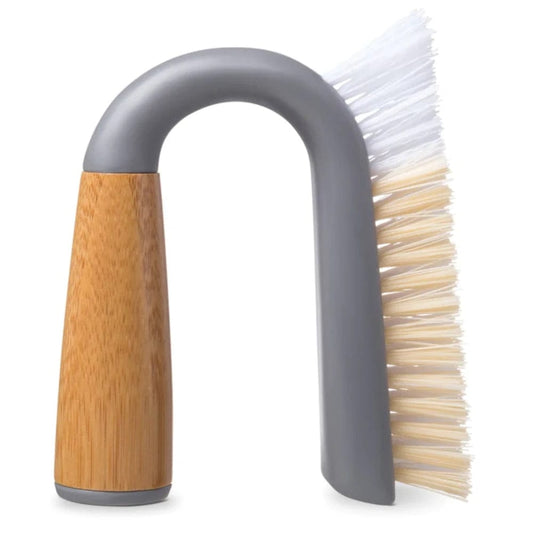
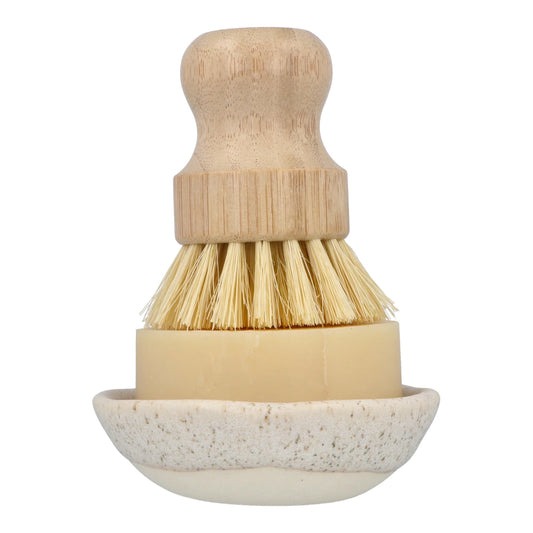
Find our favourite grunge-buster grout brush here

Laundry boosting & whitening
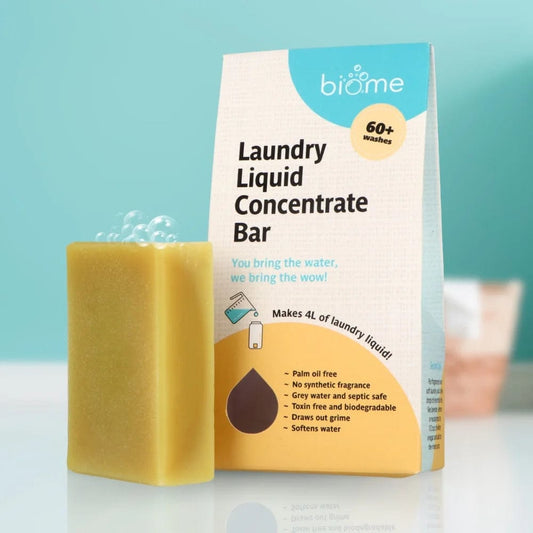
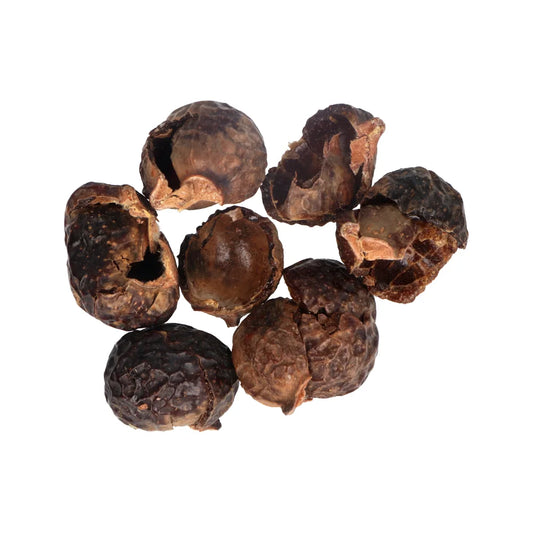
To brighten whites or light soiling, dissolve 2-3 tablespoons and add to washing machine. Works very well combined with Biome's Laundry Liquid or soap berries.
For a heavily soiled load, use 1/2 cup dissolved in water. It is low sudsing too, so better for machines.

Mould removal
Dissolve 3/4 cup per 4 litres of hot water, apply to surface, gently work in with brush or sponge, leave for 30 minutes then rinse thoroughly.
Also, read how clove oil can help remove mould

Cleaning tea cups and stained mugs
Soak cups and mugs in hot water with a small amount of oxygen bleach for 15–30 minutes.
Helps lift stubborn tea and coffee staining without scrubbing.

Water bottles
Soak bottles and lids in hot water with one tablespoon of sodium percarbonate for one hour, rinse thoroughly.
For more detail, read our guide How to clean a water bottle

Reusable menstrual pads and cloth nappies
Dissolve 1/2 to 3/4 cup per 4 litres of hot water, soak for at least 30 minutes or overnight, then wash.
Dive deeper with our guide How to remove stains from cloth nappies naturally

Outdoor cushions and fabric furniture
Dissolve oxygen bleach in warm water and apply to outdoor cushions or fabric surfaces.
Helps lift mould, dirt and general weather staining (patch test first).

Bathroom & toilet cleaning
Best used for removing residue, stains or odours rather than everyday wiping.
Dilute 1/2 cup per 4 litres of warm/hot water for deeper cleaning of surfaces like fridge interiors, bathroom tiles and sinks, and toilets.

Bins and smelly containers
Dissolve in warm water and soak or wipe down bins and containers.
Helps neutralise odours and break down residue build-up.

Drains
Any leftover solution can be poured down the sink or toilet to help clean and deodorise drains.
Is Oxygen Bleach safe for septic systems?
Chlorine bleach kills everything, including good bacteria, so is they are not suitable for septic systems. Oxygen bleach is more safe for septic, but, do not tip large amounts of oxygen bleach down the toilet.
Important: where to use caution
Oxygen bleach is versatile, but it’s not suitable for every surface.
Always patch test first, especially on fabrics and surfaces you care about.
- Wool, silk and delicate fabrics: can damage fibres and may strip colour (for example, wool carpets or rugs).
- Coloured fabrics: generally safe, but dyes can be unstable — patch testing is important.
- Natural stone (marble, limestone): can react with the alkaline solution and cause damage.
- Wood and finished surfaces: may affect coatings or finishes.
- Aluminium and some metals: can dull or react over time.
- Stainless steel: generally safe when diluted and rinsed, but avoid leaving it sitting on the surface for extended periods as it may dull the finish.
If in doubt, start with a diluted solution and test on a small, hidden area first.
Ready to go? Shop Oxygen Bleach here
Making the switch
Chlorine bleach has long been positioned as the default for deep cleaning.
But for many households, it’s no longer worth the trade-off.
Oxygen bleach offers a simpler, lower-tox way to clean effectively — without the fumes, residue or harsh impact on fabrics and surfaces.
If you’re looking for a single product that works across laundry, grout and general cleaning, it’s one of the most useful swaps you can make.
Buy Oxygen Bleach

References
(1) The Guardian - https://www.theguardian.com/uk-news/2017/sep/11/regularly-using-bleach-linked-to-higher-risk-of-fatal-lung-disease
(2) Exit Mould Safety Data Sheet -