





Quick answer: how do you clean a water bottle?
Wash your reusable water bottle regularly with warm, soapy water and a bottle brush, paying particular attention to the lid, mouthpiece, straw and silicone seals. For a deeper clean, use white vinegar, bi-carb soda or oxygen bleach separately, depending on what you are cleaning. If you find mould, take the bottle apart, soak and scrub each affected piece, rinse thoroughly and allow everything to dry completely before reassembling.
Get rid of unhealthy bacteria and mould from your glass, stainless steel or plastic water bottle with our steps to clean and sanitise your bottle using what you may already have at home.
Carrying a reusable water bottle is a great way to save plastic waste, save money and importantly, stay hydrated! But, we tend to forget that our bottle needs to be cleaned to prevent the build up of bacteria and mold.
Here we cover how often to wash your bottle, how to clean the inside properly, how to remove black mould and how to care for glass, stainless steel and plastic water bottles.
First published in May 2023. Updated in August 2026 with expanded advice for cleaning mould, lids, seals and different bottle materials.
Simple ways to keep your water bottle clean
- Rinse the bottle after each use rather than leaving water or other drinks sitting inside.
- Remove the lid, straw and silicone seals before washing where possible.
- Use a bottle brush rather than relying only on shaking soapy water inside.
- Use a small detail or straw brush around mouthpieces, threads, valves and narrow openings.
- Allow every part to dry completely before putting the bottle back together.
- Store an unused bottle with the lid off or sitting loosely on top.
Good to know: The bottle itself is not always the hardest part to keep clean. Silicone seals, sports caps, straws and mouthpieces can trap moisture and residue, making them more likely places for mould to develop.
How often should you clean your water bottle?
Whether you use a glass, stainless steel or plastic reusable water bottle, regular cleaning helps prevent slime, odours and mould.
As experts explain in this ABC article, a bottle filled only with chlorinated tap water presents a relatively low health risk when used by one person. However, leaving it unwashed for long periods can still lead to slimy residue, unpleasant smells and microbial build-up.
As a general guide:
- ✔︎ Water only: Rinse daily and wash thoroughly every few days.
- ✔︎ Smoothies, juice, milk or flavoured drinks: Wash after every use.
What is the best way to clean a water bottle?
1. Wash with warm, soapy water
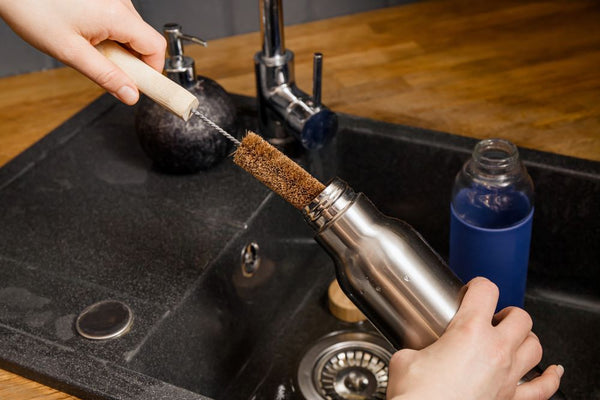
Fill the bottle with warm water and a small amount of dishwashing liquid or dish soap. Scrub the base, sides, shoulders and neck using a bottle cleaning brush.
Wash the lid separately and pay close attention to the mouthpiece, threads, straw and silicone seals. A long straw brush or small detail brush is useful for narrow channels and sports sipper tops.
2. Rinse thoroughly
Rinse the bottle and every separate component with clean water to remove soap and loosened residue. If the bottle has a sipper valve, push clean water through the opening where possible.
3. Allow every part to dry completely
Place the bottle upside down on a drying rack and leave the lid, straw and seals separate. Do not close the bottle while any part is still damp, as trapped moisture encourages mould and unpleasant smells. This is an important step because bacteria thrive in moist environments.
If possible, place your clean and dry bottle or lid pieces in bright sunlight for a few hours. Sun is incredible for killing mould and bacteria.
4. Deep clean when needed
For occasional maintenance, use one of the methods below. Always follow the bottle manufacturer's care instructions and use cleaning ingredients separately rather than mixing different cleaners together.
White vinegar
✔ Mineral build-up
✔ Musty smells
✔ Soaking lids and seals
Fill your drink bottle with around 4/5 water and 1/5 white vinegar, soak, then scrub and rinse thoroughly.
Bi-carb soda
✔ Lingering smells
✔ Gentle scrubbing
Add one tablespoon to warm water, shake the mixture in the bottle and leave for several hours, then brush and rinse.
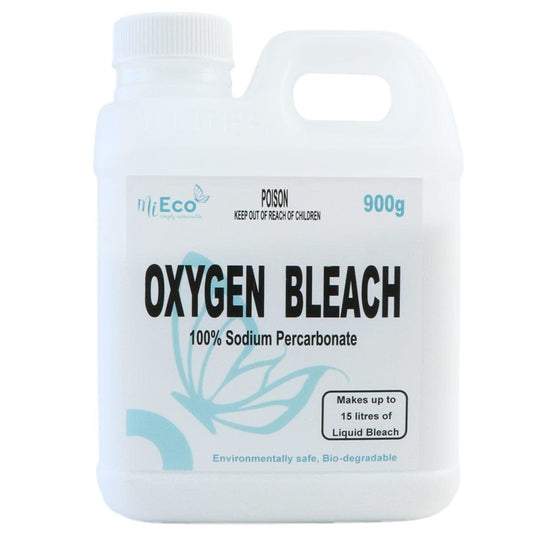
Oxygen bleach: How To Sanitise A Water Bottle
✔ Deep cleaning
✔ Sanitising removable parts
Disinfect or sanitize Oxygen bleach. Soak your bottles, tops and straws in the sink with some hot water and a teaspoon of the powder, then rinse all surfaces thoroughly.
For those who really want a convenient bottle cleaning tablet, check out our recipe here for Homemade Bottle Cleaning Tablets.
How to remove mould from a water bottle
If you notice black spots, a musty smell, slime or visible mould in your drink bottle, stop using it until it has been properly cleaned. The best way to remove mould from a water bottle is with white vinegar.
- Empty the bottle and rinse it with warm water.
- Take apart the lid, straw, mouthpiece and any removable silicone seals.
- Soak the bottle and removable parts in equal parts white vinegar and warm water for at least one hour.
- Scrub every surface with a bottle brush, straw brush or small detail brush..
- Rinse thoroughly with clean water.
- Allow every component to dry completely before reassembling.
For stubborn residue or a deeper clean, soak suitable bottle parts in oxygen bleach instead (see above).
Don't just clean the visible mould. It can also hide beneath silicone seals, inside straws and within the narrow channels of bottle lids.
If mould is particularly stubborn, you can also use a mixture of bi-carb soda and vinegar. Sprinkle bi-carb soda inside the bottle or over the lid, add vinegar and allow it to fizz for a few hours before scrubbing and rinsing thoroughly.
If possible, leave the clean bottle and lid pieces in bright sunlight for a few hours, as sunlight can help reduce mould and bacteria.
I drank from a mouldy water bottle. What should I do?
If you've had that "oh no… my water bottle has mould and I drank from it" moment, don't panic. For most healthy people, accidentally drinking from a mouldy bottle isn't likely to cause serious harm. However, it is a sign your bottle needs a proper clean.
Follow the cleaning steps above, make sure every component is thoroughly sanitised and completely dry before using the bottle again. If you start to feel unwell or have any concerns, seek advice from a healthcare professional.
How to remove black mould from silicone seals
Silicone seals and rubber gaskets are among the most common places for black mould to appear.
- Carefully remove the seal if the bottle design allows.
- Soak it separately in white vinegar or a correctly diluted oxygen bleach solution.
- Scrub both sides and the groove where the seal sits with a small brush.
- Rinse thoroughly and allow it to dry completely before replacing it.
If black marks remain embedded in the silicone, the seal is damaged or a musty smell returns after cleaning, replacing the seal is usually the best option.
How to remove mould from a water bottle lid or mouthpiece
Bottle lids often trap moisture in hidden channels, hinges and seals.
Remove as many components as the manufacturer's instructions allow, soak them separately, then use a detail brush to clean around threads, valves and narrow drinking openings. Rinse thoroughly and allow every piece to dry before reassembling.
How to remove mould from a water bottle straw
Run a narrow straw brush through the full length of the straw using warm, soapy water. If mould remains, soak the straw separately before brushing again. Replace any straw that remains stained, split or difficult to clean.
✔︎ How to stop a water bottle going mouldy
- Don't leave water or other drinks sitting in the bottle for days.
- Wash sweetened, milky or flavoured drinks out promptly.
- Remove and clean silicone seals regularly.
- Allow the bottle and lid to dry completely between uses.
- Store the bottle with the lid off or loosely fitted.
- If possible, leave clean bottle and lid pieces in bright sunlight for a few hours, as sunlight can help reduce mould and bacteria.
- Replace worn, cracked or permanently stained seals and components.
How to clean water bottle lids, mouthpieces and seals

Lids often need more attention than the bottle itself because they contain narrow channels, hidden seals and moving parts where moisture and residue can collect.
Remove the straw, mouthpiece and silicone seal where possible, then wash each part separately with warm, soapy water. Use a straw or detail brush to clean inside narrow openings, around threads and beneath seals. Rinse thoroughly and allow every component to dry completely before reassembling.
How to clean different types of water bottles
How to clean a glass water bottle
Glass water bottles are generally straightforward to clean because glass does not usually absorb flavours or smells. Wash the bottle with warm, soapy water and use a long bottle brush to reach the base and shoulders.
Wash the lid and silicone seal separately, as these parts are more likely than the glass itself to retain smells or develop mould.
If the bottle is dishwasher safe, follow the manufacturer's instructions. Avoid sudden temperature changes, such as pouring boiling water into cold glass, as thermal shock can crack or break it.
How to clean a stainless steel water bottle
Wash a stainless steel bottle using warm, soapy water and a non-abrasive bottle brush. Scrub around the base and shoulders, then rinse thoroughly and leave it open to dry.
For lingering smells, add one tablespoon of bi-carb soda to warm water and leave it for several hours before brushing and rinsing. For mineral residue, use diluted white vinegar separately.
Although mould does not feed on stainless steel itself, it can grow on residue left inside the bottle or within plastic and silicone lid components.
Avoid abrasive cleaners or scourers that could scratch the interior, and check the manufacturer's care advice before using strong cleaning products.
How to clean a plastic water bottle
Follow the same basic cleaning steps, but use a soft bottle brush. Harsh or abrasive scrubbers can scratch the plastic, creating tiny grooves that trap dirt and bacteria and may contribute to microplastic shedding over time.
Plastic bottles are more likely than glass or stainless steel to absorb flavours and retain smells. A bi-carb soda soak can help remove lingering odours, while diluted white vinegar can help with some residue. High-quality plastics such as Tritan water bottles are generally more resistant to staining and odours.
Check the bottle regularly for cloudiness, deep scratches, cracks or persistent smells. Replace damaged bottles or components that can no longer be cleaned effectively.
Can you clean a water bottle in the dishwasher?
Many reusable water bottles are dishwasher safe, but always check the manufacturer's instructions first.
Some bottles have lids, painted finishes, insulated components, straws or silicone seals that must be hand washed. Dishwasher-safe plastic parts should generally be placed on the top rack, while printed or coloured bottles may need hand washing to preserve their finish.
Which water bottle is easiest to keep clean?
Lastly, it is worth mentioning that glass water bottles and stainless steel bottles are much easier to keep clean than plastic bottles. Over time, plastic starts to break down and the surface becomes compromised, making it perfect for harbouring bacteria.
Dee Carter, Professor in Microbiology at the University of Sydney, told the ABC:
"Does not recommend plastic bottles – reusable or otherwise. They start to get that kind of plasticky flavour over time, and that's because stuff is leaching out of the plastic into the water – probably not stuff you really want to be drinking. This is still the case if they're BPA-free. Instead, she suggests using metal bottles or glass bottles."
In practice, bottles with wide openings, simple removable lids and replaceable seals are usually the easiest to keep clean. Even glass and stainless steel bottles can develop mould if moisture remains trapped inside a complicated lid, straw or silicone seal.
When choosing a bottle, look for:
✔︎ A wide opening that fits a bottle brush.
✔︎ A lid with removable, replaceable seals.
✔︎ A simple mouthpiece without inaccessible channels.
✔︎ Replacement straws, seals or lid parts.
What you need to clean a reusable water bottle
Straws and lids
Use small detail brushes for straws, seals, threads and mouthpieces.
Deeper cleaning
Use white vinegar, bi-carb soda or oxygen bleach separately as needed.
Make choosing a reusable water bottle easier
Browse our range of glass, stainless steel and Tritan reusable water bottles, chosen for their durable materials and thoughtful designs that are easy to clean and built for everyday use.
Self-cleaning water bottles
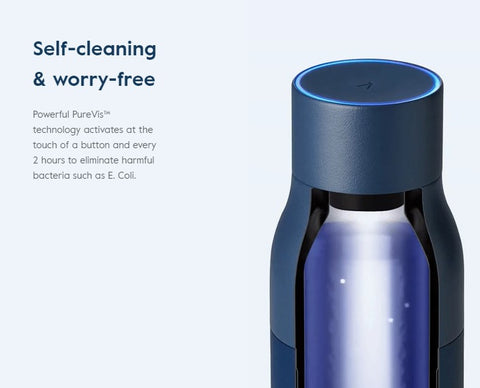
Are you finding that your water bottle stinks? The LARQ self cleaning water bottle is the world's first water bottle that purifies water and neutralises 'bottle stink' on-the-go. The UV-C light technology built into the lid, eradicates up to 99.99% of bacteria and 99.99% of viruses—meaning you can even sterilise water found in streams while out hiking and camping. It's the same UV light technology that hospitals use for sterilising medical implements.
Larq bottles are stainless steel so even better without plastic. Choose from Larq insulated bottle that is 500ml capacity, or the more lightweight single wall 700ml uninsulated. To learn more, see our Larq Frequently Asked Questions.
Frequently asked questions
What is the black stuff in my water bottle?
Black spots may be mould, particularly if they appear around the lid, straw, mouthpiece or silicone seal. Dark residue can sometimes also be trapped drink residue or mineral build-up. Take the bottle apart, soak and scrub each component, and replace any part that remains stained, damaged or musty.
Can mould grow in a stainless steel water bottle?
Mould can grow on organic residue left inside a stainless steel bottle and is especially likely to develop within its plastic or silicone lid components. Clean the bottle, lid, seals and straw separately.
Why does my water bottle smell?
Smells often come from moisture or residue trapped inside the lid or silicone seal rather than from the bottle itself. Take all removable pieces apart, wash them separately and let them dry completely.
Can you clean a water bottle with vinegar?
Yes. Diluted white vinegar can help with mineral deposits, musty smells and soaking removable bottle parts. Rinse everything thoroughly before using the bottle again.
Can you clean a water bottle with bi-carb soda?
Yes. Add approximately one tablespoon of bi-carb soda to warm water and leave it for several hours before brushing and rinsing. It is particularly useful for lingering smells.
Can you use vinegar and bi-carb soda together?
They create a strong fizz but largely neutralise one another. Use vinegar and bi-carb soda separately so each can perform its intended cleaning job.
Can I use bleach to clean a water bottle?
Only use a cleaning product if both its label and the bottle manufacturer's instructions confirm it is suitable. Never mix chlorine bleach with vinegar, oxygen bleach or other cleaning products, and rinse the bottle extremely thoroughly.
Should I throw away a mouldy water bottle?
A bottle may be reusable if every affected surface can be fully accessed, cleaned, rinsed and dried. Replace the bottle or individual components if mould remains embedded, parts are cracked or damaged, or a musty smell returns after cleaning.
How do you clean the bottom of a narrow bottle?
Use a bottle brush long enough to reach the base. Add warm, soapy water and scrub the bottom, sides and shoulders rather than relying only on shaking the bottle.
How do you clean a water bottle without a brush?
Soaking and shaking with warm, soapy water can loosen some residue, but it may not remove build-up from the base and shoulders. A properly sized bottle brush provides a more thorough clean.
How do you prevent mould in a child's drink bottle?
Empty the bottle daily, pull apart the lid and straw, wash all components carefully and leave them separated until completely dry. Check hidden seals and valves regularly for trapped residue.
Related reads
Homemade water bottle cleaning tablets
Make convenient DIY cleaning tablets for reusable bottles using simple ingredients.
How to choose the right water bottle
Compare reusable bottle materials, sizes, lids and features for everyday use.
Everything to know about self-cleaning water bottles
Learn how UV-C self-cleaning bottles work and how they should be maintained.
How to clean glass containers and bottles
Clean narrow glass bottles, cloudy containers, stubborn food residue and sticky labels.