





Originally published September 2022. Updated April 2026.
Let’s talk about deodorant. It’s actually a favourite topic here at Biome HQ — we have many chats about which natural deodorants we’ve tried and which ones work best on our skin.
Switching to natural deodorant can feel confusing at first — especially if it’s not working the way you expected. But how does natural deodorant actually work? And how do you know which one will work for you?
If you’ve thought about making the switch but don’t know where to start, keep reading.
Quick answers
Why do I smell worse after switching to natural deodorant?
Because your body is adjusting after stopping antiperspirant. Sweat is no longer blocked, and bacteria levels are rebalancing.
How long does natural deodorant take to work?
Usually 1–4 weeks, depending on your skin, lifestyle, and the formula you’re using.
Is natural deodorant actually effective?
Yes. Natural deodorant can work really well — it just works differently. It reduces odour by targeting bacteria, but it doesn’t stop sweat.
Why am I still sweating with natural deodorant?
Because natural deodorant doesn’t block sweat glands. It allows your body to sweat naturally while helping manage odour.
Natural deodorant can take a little experimenting, but once you find the right formula, it can become a simple and reliable everyday swap.
Why do I smell worse after switching to natural deodorant?
This is one of the most common things people notice when they stop using antiperspirant.
Antiperspirants use aluminium salts to block sweat glands, which reduces wetness. When you stop using them:
- your sweat glands start working normally again
- your skin microbiome begins to rebalance
- bacteria levels shift under your arms
Sweat itself does not usually smell strongly. Body odour happens when sweat mixes with bacteria on the skin. During the transition phase, that balance can feel a little off.
Some people call this a “detox” period. A more accurate way to think about it is an adjustment period, where your underarm skin, sweat and bacteria are finding a new balance.
How long does natural deodorant take to work?
For most people, it can take around 1 to 4 weeks to feel settled with natural deodorant.
Some people adjust within a few days. Others need a couple of weeks, especially if they have used antiperspirant for a long time or are trying a very different formula.
It depends on:
- your skin microbiome
- stress and hormones
- diet
- the formula you’re using
During this phase, it can help to:
- apply to clean, dry skin
- use a small amount rather than over-applying
- reapply once during the day if needed
- wear breathable natural fibres where possible
- give one formula enough time before switching again
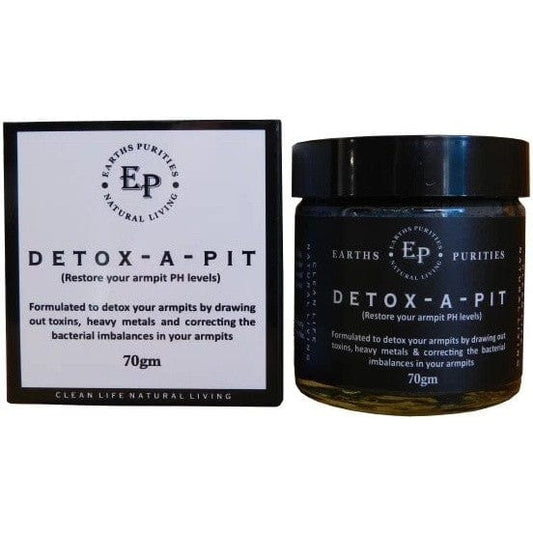
If you want extra support during the transition, Earths Purities Detox-a-Pit is designed to help cleanse the underarm area and support bacterial balance.
Is natural deodorant actually effective?
Yes — when you find the right formula for your body. If you are switching from conventional antiperspirant, you may notice more odour at first while your body adjusts. This is common, and usually settles once you find the right formula for your skin.
Natural deodorant works by:
- reducing odour-causing bacteria
- absorbing some moisture, depending on the ingredients
- supporting a balanced skin environment
It does not stop sweat completely, but many people find odour becomes manageable and more predictable over time.
Natural deodorants avoid ingredients like aluminium salts, synthetic fragrance and certain petrochemicals, instead using plant-based and mineral ingredients to manage odour more gently.
If you’re still finding your match, explore our natural deodorant collection — or read the best natural deodorants in Australia (and how to choose one that works) for help choosing.
Why am I still sweating with natural deodorant?
Because natural deodorant doesn’t block sweat glands.
Antiperspirants use aluminium salts to stop sweat. These react with moisture to temporarily block the sweat glands and reduce how much sweat reaches the surface of the skin.
Natural deodorants don’t do this — they allow your body to sweat while helping manage odour.
Some formulas include ingredients like clay, arrowroot or tapioca starch to absorb moisture, but sweating is still part of the process.
That is the biggest difference between deodorant and antiperspirant. Antiperspirants block sweat. Natural deodorants allow your body to sweat, while helping reduce odour.
Some natural deodorants include ingredients such as arrowroot, kaolin clay or tapioca starch to absorb moisture, but they will not stop sweat completely.
Why isn’t my natural deodorant working?
If natural deodorant is not working for you, it does not always mean natural deodorant is the problem. It may mean the formula is not right for your skin, your body is still adjusting, or you need to tweak how you apply it.
Common mistakes when switching to natural deodorant
- Applying too much: a thin layer works best.
- Applying to damp skin: always apply to clean, dry skin.
- Switching too quickly between products: give one formula at least two weeks, unless irritation occurs.
- Choosing the wrong formula for your skin type: bicarb can be effective, but may irritate sensitive skin. If you are dealing with irritation or sensitivity, start here → natural deodorant for sensitive skin
- Not reapplying during the adjustment phase: especially on hot days, active days or while your body is settling.
- Expecting it to stop sweat completely: natural deodorant helps with odour, not sweat blocking.
- Wearing synthetic fabrics that trap odour: breathable natural fibres can help.
Is aluminium in deodorant something to worry about?
Aluminium is the key active ingredient in antiperspirants because it is effective at blocking sweat glands. However, this is also why many people choose to avoid it.
Aluminium works by interfering with the body’s natural sweating process, and it can cause irritation for some people, particularly in sensitive underarm skin.
There is ongoing research into the long-term effects of aluminium exposure. Some studies have explored links between high levels of aluminium and health concerns including neurological effects and breast tissue exposure.
Because of this uncertainty, we believe it's best to take a precautionary approach and choose to avoid aluminium-based products altogether.
What ingredients in natural deodorant actually work?
Natural deodorants avoid ingredients like aluminium salts, synthetic fragrance and certain petrochemicals, instead using plant-based and mineral ingredients to manage odour more gently.
At Biome, we also prioritise palm oil-free formulations, alongside ingredients that are effective, lower-tox and better aligned with everyday skin comfort.
Key ingredients include:
Baking soda (sodium bicarbonate)
Very effective at neutralising odour, but can cause irritation for some.
Magnesium hydroxide
Targets odour-causing bacteria and is often gentler.
Clays and starches
Help absorb moisture and keep underarms feeling drier.
Coconut oil and plant-based ingredients
Naturally antibacterial and support skin balance.
Crystal deodorants (mineral salts)
Create a surface barrier against bacteria, but are still a form of aluminium. If you prefer to avoid aluminium entirely, choose other formulas.
What about the “detox” phase?
When switching to natural deodorant, many people notice a short adjustment period.
This can include:
- stronger odour
- slight irritation
- changes in sweat levels
Rather than a true “detox”, this is your body adjusting after no longer using antiperspirant. Your sweat glands are functioning normally again, and the bacteria on your skin are rebalancing.
This usually settles within 1–2 weeks.
Some people choose to use products like Earths Purities Detox-a-Pit to support the transition.
What is the best natural deodorant to start with?
The best natural deodorant depends on your skin, sweat levels and sensitivity.
A good place to start is a bicarb-free, gentle formula like Biome Natural Deodorant Cream — especially if your skin is reactive.

Biome Natural Deodorant Cream
A gentle, bicarb-free formula designed for reliable odour control without the ingredients that commonly trigger irritation.
Why it stands out: a pH-balanced formula for reactive underarms, especially if you have had trouble with baking soda deodorants in the past.
“I love this deodorant. It works, lasts all day and I get no irritation at all.
For a fuller guide → the best natural deodorants in Australia (and how to choose one that works) .
Can you make your own natural deodorant?
Yes. Making your own natural deodorant can be a simple way to reduce packaging and customise ingredients.
Try this DIY natural deodorant recipe if you prefer a more hands-on approach.
What if you want plastic-free deodorant?
If you are reducing plastic in your bathroom, deodorant is a simple place to start.
Look for options in glass jars, cardboard tubes or reusable packaging. For more simple low-waste changes, read our guide to plastic free swaps.
Read more here → plastic free deodorants: how to choose the best one.
FAQs
Can natural deodorant stop body odour completely?
It can significantly reduce odour, but results vary depending on your body and the formula.
Why do my armpits itch with natural deodorant?
Often due to baking soda sensitivity or applying after shaving. If this sounds familiar, read our guide to how to avoid natural deodorant rash.
How long does it take for natural deodorant to start working?
Most people adjust within a few days to a couple of weeks. During this time, you may notice more odour as your body adapts — this is temporary.
Do you need to detox your armpits when switching to natural deodorant?
No formal detox is required. Your body will naturally rebalance once you stop using antiperspirants, though there can be a short adjustment period.
Why do I still smell when using natural deodorant?
This can happen if the formula isn’t right for your body, if too much is applied, or if it’s applied to damp skin. Trying a different formula (like bicarbonate-free or magnesium-based) often helps.
Is natural deodorant better for sensitive skin?
It can be — especially formulas without baking soda, synthetic fragrance, or alcohol. Look for gentle options designed specifically for sensitive skin.
What’s the difference between natural deodorant and antiperspirant?
Antiperspirants use aluminium salts to block sweat, while natural deodorants work by neutralising odour and supporting the skin’s natural balance.
Explore all our natural deodorants here >
Related Reads
Best natural deodorant for sensitive skin
How to avoid natural deodorant rash