





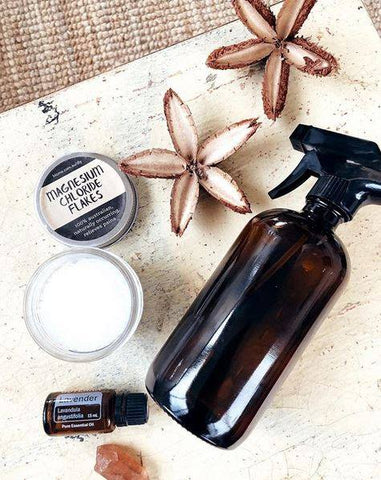
Updated September 2026.
Epsom salt and magnesium salt are both popular remedies for health and wellness purposes. But what is the difference between them, and which one should you use? Here, we compare Epsom salt (magnesium sulphate) with magnesium salt or magnesium flakes (magnesium chloride), including their sources, benefits, uses and side effects.
Quick answer: Epsom salt or magnesium salt?
Choose Epsom salt if you want traditional magnesium sulphate crystals for a bath or a premade bath soak blended with essential oils and botanicals.
Choose magnesium flakes if you prefer magnesium chloride, want a higher concentration of magnesium or want magnesium that is also available in topical sprays, gels and lotions.
Neither is universally better. Both can be used in a relaxing bath, and the best choice may depend on the form of magnesium you prefer, its source, purity, cost and how your body responds. You can also use them together.
Epsom salt vs magnesium salt at a glance
| Epsom salt | Magnesium salt or flakes | |
|---|---|---|
| Compound | Magnesium sulphate | Magnesium chloride |
| Appearance | Small crystals or powder | Larger, thin flakes |
| Natural sources | Rare underground mineral deposits | Seawater and salt lakes containing trace minerals |
| Common forms | Bath crystals, bath soaks and body care | Bath flakes, sprays, gels and lotions |
| Magnesium concentration | Lower than magnesium chloride | Higher, so you may need a smaller amount |
| Commonly chosen for | Traditional mineral baths and blended bath soaks | Baths and targeted topical magnesium products |
What they have in common
✓ Both are forms of magnesium.
✓ Both can occur naturally, although synthetic versions also exist.
✓ Both are commonly dissolved in warm bath water.
✓ Both are available as flakes, crystals, powders or topical products.
✓ Both are generally safe and well-tolerated when used externally or in moderation.
What is Epsom salt?
Epsom salt is a chemical compound made from magnesium, sulphur and oxygen. Its chemical name is magnesium sulphate. It looks similar to table salt but has a very bitter taste. It was named after Epsom, a town in England where it was first discovered.
Epsom salt is widely used as a bath salt, as it is believed to ease muscle soreness, stress, inflammation and skin problems. It can also be taken by mouth as a laxative or magnesium supplement.
Explore Biome’s products made with Epsom salt, including bath soaks and body care containing magnesium sulphate.
What is magnesium salt?
Magnesium can form several different mineral compounds. In this article, when we refer to magnesium salt or magnesium flakes, we mean magnesium chloride.
Magnesium chloride is made from magnesium and chloride. It has a flake-like appearance and a very bitter taste. It is usually harvested from seawater or salt-lake sources containing other trace minerals.
Magnesium salt is also used as a bath salt, as it is claimed to improve skin hydration, wound healing, detoxification and relaxation. It can be applied to the skin as a lotion or spray for natural skincare, or taken by mouth as a magnesium supplement.
For more detail, see our guide to the different forms of magnesium.
What is the difference between natural and synthetic Epsom and magnesium salts?
Epsom salt and magnesium salt are both minerals that can be found naturally in seawater, springs, salt lakes or underground deposits. However, not all Epsom salt and magnesium salt products are natural. Some are made synthetically in factories from chemical compounds.
Naturally occurring Epsom salt is rare because very few natural Epsom salt deposits exist. Natural Epsom salt can be obtained from underground deposits and purified through physical separation and recrystallisation.
When choosing either salt:
- Check whether it is naturally sourced or synthetically produced.
- Look for the source and country of origin.
- Check for relevant natural or organic certifications.
- Follow the directions provided for the particular product.
Are Epsom salt and magnesium salt made in Australia?
There are several brands and suppliers of Epsom salt and magnesium salt in Australia. Some source their products from natural seawater or salt lakes, while others use local manufacturers.
However, not all Epsom salt and magnesium salt products are made in Australia. Some are imported or synthetically produced. If you want to support Australian-made products, check the label and look for the Australian Made logo.
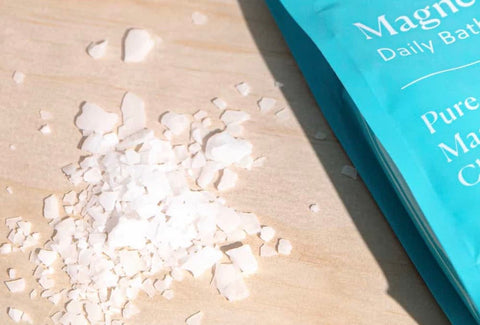
Amazing You, formerly Amazing Oils, makes topical magnesium products using natural magnesium extracted from the salt lakes of Western Australia. The magnesium oil is processed into sprays, gels, lotions and flakes. The brand claims it is the only organically certified source of magnesium in the world and has the highest grade of magnesium available on the market.
What are the benefits of Epsom salt and magnesium salt?
Both Epsom salt and magnesium salt are rich in magnesium, a mineral that plays an important role in over 300 biochemical functions in the body. Magnesium deficiency can cause symptoms such as fatigue, muscle cramps, headaches, insomnia, anxiety and depression.
Some of the reported benefits of using Epsom salt and magnesium salt include:
✓ Relieving muscle pain and stiffness.
✓ Reducing stress and promoting relaxation.
✓ Improving blood circulation and blood pressure.
✓ Supporting bone health and preventing osteoporosis.
✓ Enhancing skin health and beauty.
✓ Boosting the immune system and fighting infections.
✓ Regulating blood sugar and preventing diabetes.
✓ Improving mood and cognitive function.
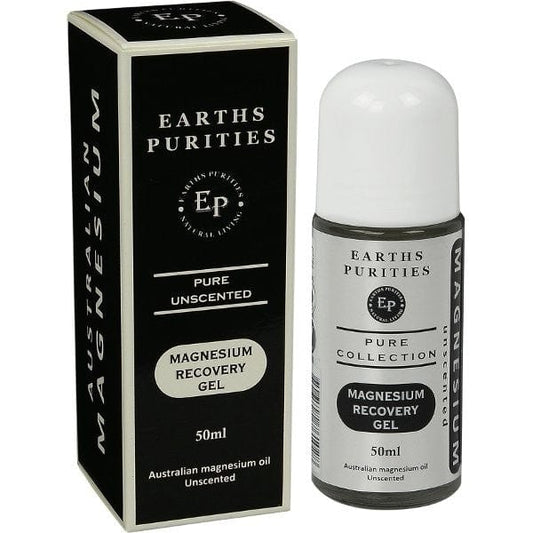
Applying magnesium topically can help to relieve pain, such as with a magnesium recovery gel.
How do you use Epsom salt and magnesium salt?
In a bath
The most common way to use Epsom salt and magnesium salt is to dissolve them in warm water and soak for 15 to 20 minutes. The recommended amount is approximately two cups of salt per bath. You can also add essential oils or other ingredients to enhance the experience.
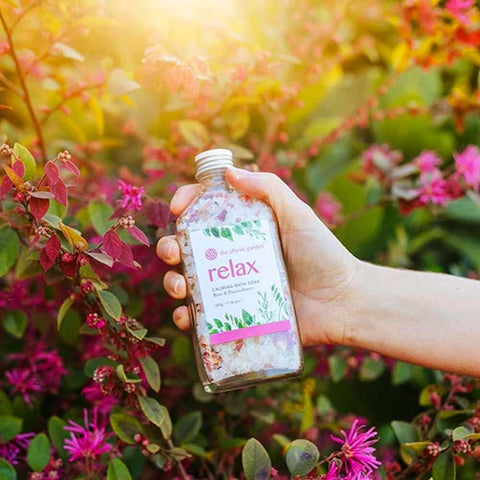
Premade Epsom salt bath products include Corrynne’s Revive Bath Salts and Olieve & Olie Bath Salts.
On the skin
Epsom salt and magnesium salt can also be applied directly to the skin in a lotion or spray. This can help with skin conditions such as eczema, psoriasis, acne or wounds.
You can make your own lotion or spray by mixing salts with water or oil, or explore Biome’s magnesium sprays, gels, lotions and bath flakes.
By mouth
Another option is to take Epsom salt and magnesium salt by mouth as a supplement. This can help with constipation, electrolyte imbalance or magnesium deficiency. However, always consult your doctor before doing this, as taking too much can cause side effects such as diarrhoea, nausea, vomiting or irregular heartbeat.
Is magnesium or Epsom salt better for a bath?
Both magnesium and Epsom salts can be used for a bath. They have similar benefits, such as relaxing muscles, reducing stress, improving skin, and more.
However, many people prefer magnesium flakes because:
- They contain other trace minerals from seawater or salt-lake sources.
- Magnesium chloride is more readily absorbed by the body than Epsom salt, as chloride is more compatible with the body’s electrolyte balance.
- Magnesium chloride has a higher concentration of magnesium, so you may need a smaller amount to get the same effect.
Choose Epsom salt if you want:
✓ Magnesium sulphate.
✓ Traditional bath crystals or powder.
✓ A premade soak with essential oils and botanicals.
✓ A versatile product with other household uses.
Choose magnesium flakes if you want:
✓ Magnesium chloride.
✓ A higher magnesium concentration.
✓ Magnesium sourced from seawater or salt lakes.
✓ A choice of flakes, sprays, gels and lotions.
What are the side effects of Epsom salt and magnesium salt?
Epsom salt and magnesium salt are generally safe and well-tolerated when used externally or in moderation. However, some people may experience allergic reactions, skin irritation, dehydration or kidney problems if they use too much or too often.
Factors that may increase the risk of side effects include:
- Kidney disease or another medical condition.
- Taking medications that interact with magnesium.
- Pregnancy or breastfeeding.
- Open wounds or broken skin.
- Sensitive skin or allergies.
To avoid side effects, follow the instructions on the label or consult your doctor before using Epsom salt or magnesium salt. Drink plenty of water before and after using them to stay hydrated.
So, which one should you use?
There is no definitive answer to whether Epsom salt or magnesium salt is better. Both have similar benefits and uses, but they may differ in their absorption rate, bioavailability, purity and cost.
Some studies suggest that magnesium chloride may be more readily absorbed by the body than magnesium sulphate, as chloride is more compatible with the body’s electrolyte balance. However, more research is needed to confirm this.
Some sources claim that magnesium chloride may be more pure and natural than magnesium sulphate because it contains other trace minerals from seawater. However, this depends on the quality and origin of the particular product.
The best way to find out which one works better for you is to try them both and see how you feel. You can also mix them together to get the best of both worlds.
Explore products with Epsom salt
Discover bath soaks and body care containing Epsom salt, also known as magnesium sulphate.
Shop Epsom salt products →Explore magnesium products
Find magnesium chloride bath flakes, sprays, gels, lotions and other topical magnesium products.
Shop magnesium products →Frequently asked questions
Is Epsom salt magnesium?
Yes. Epsom salt contains magnesium, but it is not pure magnesium. It is a mineral compound called magnesium sulphate, made from magnesium, sulphur and oxygen.
Is Epsom salt the same as magnesium sulphate?
Yes. Epsom salt is the common name for magnesium sulphate. “Epsom salt” and “magnesium sulphate” refer to the same compound.
What is magnesium salt?
Magnesium salt is a broad term because magnesium can form several different mineral compounds. In bath and topical body products, “magnesium salt” or “magnesium flakes” commonly refers to magnesium chloride. Epsom salt is another type of magnesium salt made from magnesium sulphate.
What is the difference between magnesium flakes and Epsom salt?
Magnesium flakes are generally made from magnesium chloride, while Epsom salt is magnesium sulphate. Magnesium chloride usually has a larger, flake-like texture, while Epsom salt looks like small salt crystals or powder. Both are commonly dissolved in bath water.
Is Epsom salt the same as normal salt?
No. Epsom salt is magnesium sulphate, while ordinary table salt is sodium chloride. They may look similar, but they are different compounds used for different purposes.
Related reads
10 Ways to Use Epsom Salt Around the Home →
A Guide to the Different Forms of Magnesium →
Magnesium for Your Winter Wellness Boost and How to Get Enough →