





Originally published March 2020, Updated August 2026
Are you looking for safe ways to store food for a long period of time, to keep leftovers for later, preserve excess fruit and veggies, or even freeze baked goods?
Glass is an excellent way to store food, whether it be in the pantry, the fridge, or even the freezer. It is perfectly safe and very easy to freeze food in glass, but there are a few things to keep in mind.
In this guide, we explain why we love freezing food in glass, which foods freeze well, and our practical tips for freezing food in glass without relying on plastic!
Can you freeze food in glass?
Yes. Most glass containers can safely be used in the freezer provided they are suitable for freezing, food has cooled before freezing, there is room for liquids to expand, and sudden temperature changes are avoided. Tempered and borosilicate glass are generally the best choices for freezing food.
Many people assume glass will automatically crack in the freezer, but in most cases it is not the freezing itself that causes breakage. Glass usually breaks because liquids expand as they freeze, there isn't enough room inside the container, or the glass experiences sudden temperature changes.
If you follow a few simple guidelines, freezing food in glass is safe, convenient and helps reduce plastic waste.
Quick answer
| Question | Answer |
|---|---|
| Can glass go in the freezer? | Yes, if it is freezer-safe and used correctly. |
| Can all glass go in the freezer? | No. Some thin or damaged glass may crack. |
| What type of glass is best? | Tempered or borosilicate glass performs best. |
| Why does glass crack in the freezer? | Usually because frozen food expands or the glass experiences thermal shock. |
| How much space should I leave? | About 3cm for liquids. |
| Can you freeze soup? | Yes. Leave room for expansion. |
| Can you freeze leftovers? | Absolutely. Glass is ideal for meal-sized portions. |
Safe freezing checklist
Before placing glass containers into the freezer:
✓ Allow hot food to cool first.
✓ Leave approximately 3cm of space at the top for liquids.
✓ Use freezer-safe glass i.e. tempered glass or borosilicate glass.
✓ Leave lids slightly loose until food has completely frozen.
✓ Avoid transferring containers directly from freezer to oven or vice versa.
✓ Don't use chipped or cracked containers.
Why we love freezing food in glass
1. Glass is healthier for the environment
- Unlike plastic, glass is not made of petrochemicals.
- Glass is a resource-efficient material, made of abundant natural raw materials, including sand and glass waste.
- Some glass can be recycled such as glass food packaging jars and bottles, but not tempered glass.
2. Freezing in glass is healthier for you and your family
- Glass does not contain BPA, PVC, Phthalates or hormone-disrupting chemicals
- It will never leach harmful chemicals into your food.
3. Less food waste
- Using glass minimises waste from plastic zip-lock bags and plastic containers
- Leftovers can be frozen instead of being left in the fridge
- Vegetable scraps can be frozen to make broth and soups later
- The contents in glass jars and containers can been seen, so food isn't likely to 'disappear' in the deep dark depths of the freezer
4. Glass is easy to keep in top condition
- Glass is non-porous, and doesn't absorb smells or discolour
- Glass is scratch proof, and after years of use it will still look new
- It is easy to clean in soapy water, plus it is dishwasher safe
- It dries quickly because it is not a porous material, unlike plastic
5. Value
- High quality, freezer-friendly glass containers can be re-used forever - no more throwing away deteriorating plastic containers.
- Saving glass jars from pasta sauce, condiments, pickles, etc, is an affordable way to grow your glass jar collection.
6. Versatile
- Many shapes and sizes, some that make stacking in your fridge or freezer easy, and some are even suitable as glass lunch containers.
- Some can easily go from oven to freezer (once food is cooled) or freezer to oven (once food is thawed), plus be used in the Air Fryer and Microwave. Check out each glass container for information on whether it is oven safe, air fryer safe, microwave safe - remembering always without the plastic lid.
What foods can I freeze in glass
- Beans - after cooking dried beans, allow to cool before you put them into a mason jar or glass container with or without liquid
- Biscuits - after cooking and cooling biscuits, freeze in a wide mouth jar
- Fruit and vegetables - first lay fruit out flat on a tray, freeze, and then transfer to a glass jar or container to go back into the freezer
- Citrus zest - save those zests and reduce food waste by freezing them in a glass jar or container
- Vegetable peels and scraps - great to keep on hand to make broth later on and easy to freeze in a glass jar or container
- Broth - if freezing broth, be sure to leave a 3cm gap from the glass jar or container (you could also use a stainless steel ice cube tray to freeze broth too)
- Soups and sauces - when freezing any liquid no matter what the consistency, it is important to leave at least a 3cm gap from the top
- Baby food - make lots in one go and freeze in glass baby food containers, for quick, healthy meals every day
- Leftovers - divide leftovers up into single meal size portions for easy grab and go mid week meals
What are the best glass containers for freezing
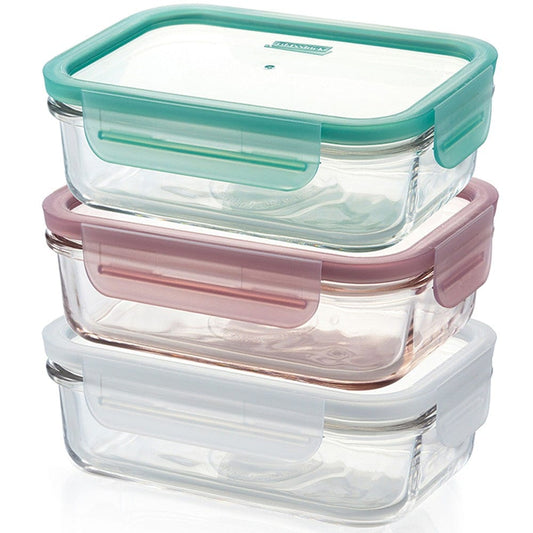
Our recommended containers for freezing food in glass, are Glasslock glass containers with snap-on lids. In fact, all the Glasslock glass containers are freezer-safe, with some being oven and air fryer safe also.
We also love these Neoflam Clik glass containers
Note for all containers: oven & air fryer safe never includes the lid, it is the glass container only.
Delve deeper with our guide on how to choose the best glass containers for different uses.
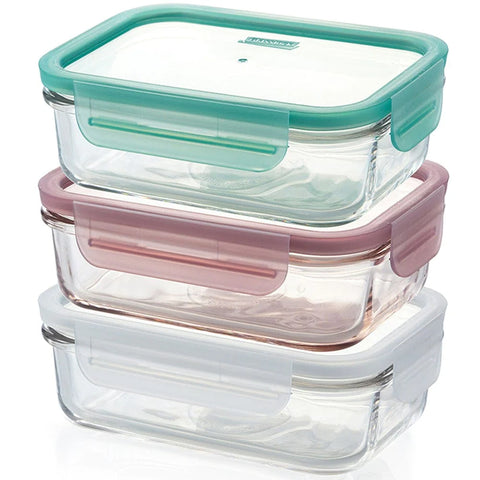
Glasslock glass container set with triple coloured plastic snap on lids | Freezer & Microwave safe
"Great product, easy to clip lid on, and nice to be able to see stored food." - Marianne

Glasslock Glass Food Container with Glass Lid | Freezer, Oven, Air Fryer & Microwave Safe
"5 Stars. Most durable and long lasting glasswear on the market. Biome also has the best customer service I’ve experienced in a long time." - Rachel

Glasslock Glass Loaf Baker with plastic lid | Freezer, Oven, Air Fryer & Microwave Safe
"I did a lot of research on the most non-toxic and safe baking option, and landed on this one. Does a great banana bread, and then after cooling, you whack the lid on and store it in the fridge. Easy!" - Dana

Neoflam Clik Glass Food Containers | Freezer, Oven, Air Fryer & Microwave Safe
"Quickly became indispensable. I use these all the time now, they are very useful. In the oven, fridge and freezer they’ve been great." - Lisa
Shop all our containers to freeze food in glass >
Tips for freezing food in glass
1. As we all know, liquids expand when frozen, so it is always advisable to leave a 3cm gap from the top of the jar or container when storing anything in the freezer. If you don't leave a 3cm gap from the top, the glass jar or container may crack.
2. Not all glass withstands thermal stress the same, so we recommend you use glass containers that are made of borosilicate glass or tempered glass when heating and freezing food and drinks.
3. You can reuse old glass jars but be mindful that they may pose a higher risk of cracking when frozen. Generally, glass jars with food inside sold in supermarkets such as jam and sauces are made from recyclable soda ash glass.
4. Lids: You can free with metal or plastic lids, but always sit lids loosely on the glass container or jar - do not screw tight or fully seal! First, allow the food to freeze and expand and then adjust the lid a little more tightly.
5. We don't recommend using thin-necked bottles due to their risk of cracking.
Common mistakes when freezing food in glass
Even experienced home cooks occasionally make these mistakes.
Filling containers completely full
Liquids expand as they freeze. Leaving around 3cm at the top helps prevent cracking.
Putting hot food straight into the freezer
Allow food to cool first so the glass isn't exposed to sudden temperature changes.
Tightening lids immediately
Freeze with lids sitting loosely first, then tighten once the contents have frozen.
Using chipped or damaged jars
Small chips and cracks weaken glass and increase the chance of breakage.
Using narrow-necked bottles
These are more likely to crack than straight-sided jars designed for food storage.
Frequently asked questions
Can you put glass containers in the freezer?
Yes, provided the container is suitable for freezing and you leave enough room for food to expand.
Can you freeze glass jars?
Yes. Wide-mouth jars are generally safer than narrow-necked jars. Always leave headspace for liquids.
Can you freeze soup in glass?
Yes. Soup freezes very well in glass containers provided there is enough room for expansion.
Can you freeze leftovers in glass?
Absolutely. Glass containers are excellent for portioning leftovers into ready-to-use meals.
Can you freeze baby food in glass?
Yes. Glass baby food containers are a convenient way to freeze homemade baby food in individual portions. Learn more here Safest Way to Freeze Baby Food without Plastic

Related reads at Biome
How To Choose The Best Glass Food Containers
Which Reusable Food Container Is Safest?
How To Use Glass Containers for Air Fryer
The Safest Way to Freeze Baby Food Without Plastic
Plastic Free Swaps: The Ultimate Plastic Free Checklist
16 Foods You Can Freeze in an Ice Cube Tray to Reduce Food Waste