





Originally published December 2016, updated September 2026.
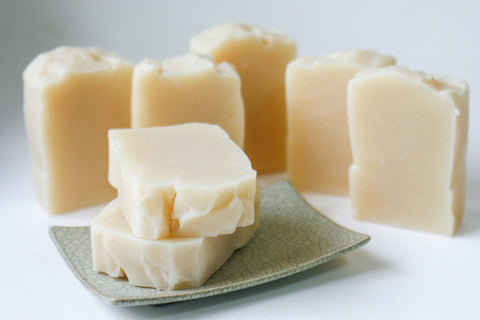
Castile soap is a vegetable-based soap traditionally made from olive oil. It is biodegradable, gentle on skin and incredibly versatile for personal care and cleaning around the home.
Castile soap is also concentrated and cost-effective, as a little goes a long way. Here are 18 practical ways to use it, including suggested amounts and dilutions.
Quick answer
Castile soap can be used for washing your face, body, hands and hair, as well as for shaving, bathing, laundry and household cleaning. You can also use it to wash dishes, clean makeup brushes and create simple sprays for the home and garden. The amount and type of soap you need will depend on what you are washing.
Not sure what makes it a true Castile soap? Read our guide to what true Castile soap is and how it is traditionally made.
What can you use Castile soap for? 18 practical ideas
1. Can you use Castile soap as a face wash?
Yes. Add two to three drops of liquid Castile soap to wet hands, work it into a light lather and gently apply it to a wet face.
2. Can you use Castile soap as a body wash?
Yes. Apply a small amount of liquid Castile soap to a wet washcloth or loofah and gently wash wet skin.
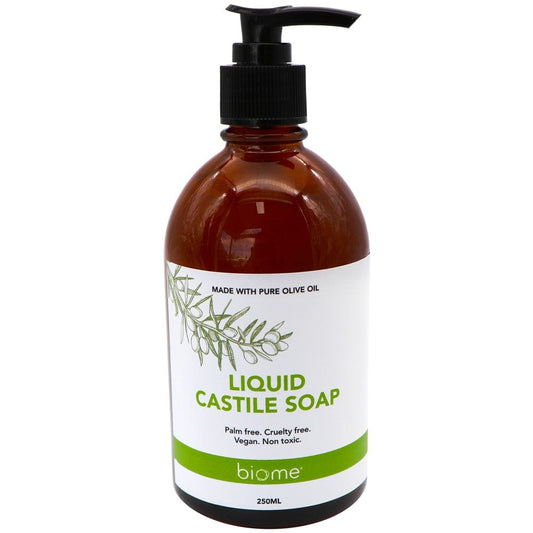
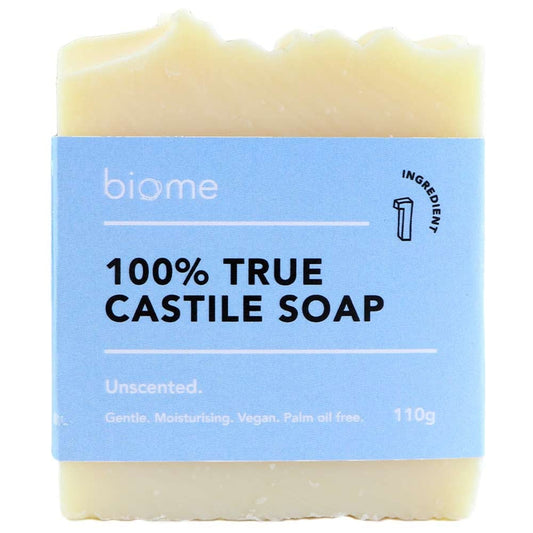
For personal care, including washing your hands, body and hair, we recommend Biome’s pure olive oil Castile soap bar or liquid Castile soap.
Traditional olive oil Castile soap has a gentle, creamy lather and is more moisturising than coconut oil-based soap. Many reviews also mention how well Biome’s unscented Castile soap works for people with sensitive skin.
3. Can you wash your hair with Castile soap?
Yes. You can use Castile soap as a simple shampoo. Work approximately 1/2 tablespoon between wet hands, or dilute 1/2 tablespoon in 1/2 cup of water, then massage it through wet hair.
4. Can you put Castile soap in the bath?
Yes. Add approximately two tablespoons of liquid Castile soap to an average-sized bath. Castile soap will not produce the same bubbles as a conventional bubble bath, but it will still gently cleanse your skin.
5. Can you shave with Castile soap?
Yes. Work the soap into a lather in wet hands before applying it to damp skin. As a general guide, use around 10 drops for the face, three drops for underarms or half a teaspoon for legs. Add more water as needed to create slip.
6. Can you use Castile soap in a foot soak?
Yes. Add approximately one and a half teaspoons of liquid Castile soap to a small tub of warm water, then soak your feet.
7. Can you use Castile soap as hand wash?
Yes. Place a small amount of liquid Castile soap into wet hands, work it into a lather, wash thoroughly and rinse. Biome’s pure olive oil Castile soap is unscented and gentle, making it a useful everyday hand wash.


8. Can you wash dishes with Castile soap?
You can use Castile soap to hand wash dishes. How to use castile soap for dishwashing: Pre-dilute one part liquid soap with 10 parts water, apply it to a dish brush and scrub your dishes before rinsing thoroughly.
Olive oil Castile soap may work well for dishes in areas with soft water. For regular dishwashing, particularly in hard water, we recommend a coconut oil-based dish soap bar. Coconut oil has a stronger, more detergent-like cleansing effect, making it particularly useful for greasy dishes. Shop all dish soap bars →
9. Can you use Castile soap for laundry?
Yes. Our solid true Castile soap bar can be used for hand washing clothes or grated into fine flakes for suitable homemade laundry powder recipes.
Liquid Castile soap can also be used for some laundry applications. Follow the washing-machine directions, begin with a small amount and adjust for the size of the load. If using vinegar, add it separately during the rinse cycle rather than mixing it directly with the soap.
If you would prefer a bar made specifically for stain treatment and washing clothes, explore our dedicated laundry soaps. Shop laundry soap bars →
10. Can you mop floors with Castile soap?
Yes. Add approximately half a cup of liquid Castile soap to 11 litres of hot water. Mop the floor as usual.
11. How do you make a Castile soap cleaning paste?
Mix one cup of bicarb soda with a quarter cup of liquid Castile soap.
Stir the ingredients into a thick paste and use it for scrubbing sinks, baths and other suitable hard surfaces.
12. How do you make an all-purpose Castile soap spray?
Biome’s concentrated liquid Castile soap is the most convenient choice for cleaning kitchens, bathrooms, floors and other suitable surfaces around the home.
Add a quarter cup of liquid Castile soap to one litre of water in a spray bottle. You can also add a quarter teaspoon of tea tree essential oil if appropriate for your household. Gently mix, then spray and wipe the surface.
Liquid Castile soap can also be diluted for mopping or mixed with bicarb soda to make the cleaning paste in the recipe above.
13. Can you clean windows with Castile soap?
Yes. Add one tablespoon of liquid Castile soap to one litre of water in a spray bottle. Spray the glass and wipe clean, then follow with a separate rinse of pure club soda or equal parts vinegar and water.
Do not mix the Castile soap and vinegar in the same bottle. The acid in vinegar reacts with the soap and can create a cloudy, oily residue. Find out why Castile soap and vinegar can turn a cleaner to mush.
14. Can you clean a toilet with Castile soap?
Yes. Pre-dilute one part liquid Castile soap with four parts water in a spray bottle and add 1/4 1/4 teaspoon tea tree oil.
Spray the toilet bowl thoroughly, sprinkle bicarb soda over the surface and scrub with a toilet brush. Allow it to sit for around 10 minutes before flushing.


15. Can you use Castile soap to wash fruit and vegetables?
Add approximately a quarter teaspoon of liquid Castile soap to a bowl of water, wash the produce and then rinse it very thoroughly under clean running water before eating.
16. Can you wash a dog with Castile soap?
Castile soap can be used occasionally as part of a diluted dog-wash mixture. The amount needed will depend on the dog’s size, coat and how dirty it is. Use only a small amount, avoid the face and eyes, and rinse the coat thoroughly.
17. Can you use Castile soap as a plant spray?
To discourage aphids and other bugs from eating plants, mix one tablespoon of liquid Castile soap into one litre of water. You can also add half a teaspoon of cayenne pepper or cinnamon if desired. Test the spray on a small section of the plant first, wait to check for damage and avoid spraying in direct sun or during very hot weather.
18. Can you use Castile soap as an ant spray?
To discourage ants inside the home, mix a quarter cup of liquid Castile soap with one litre of water in a spray bottle. You can add a quarter teaspoon of tea tree oil if appropriate for your household.
Spray the mixture on affected hard surfaces and wipe as needed. This mixture is more concentrated than the plant spray above and may burn plants, so do not use it on your garden.
Bonus: Can you clean makeup brushes with Castile soap?
Yes. Add a few drops of liquid Castile soap to a small bowl of lukewarm water. Gently swirl the bristles through the mixture, taking care not to soak the handle or the base where the bristles are attached. Rinse thoroughly, reshape the bristles and lay the brushes flat to dry.
Should you choose liquid or solid Castile soap?
Both are made in Australia from 100% Australian-grown olive oil.
Liquid Castile soap
Best for: Hands, body and household cleaning.
Choose liquid for easy dilution and maximum versatility.
Solid Castile soap
Best for: Hands, body, travel and DIY recipes.
Choose the bar for long-lasting, minimal-packaging personal care.
Ready to choose your Castile soap?
Explore Biome’s complete range of gentle and palm-oil-free Castile soaps.
FAQS
Does Castile soap need to be diluted?
It depends on how you are using it. Only a few drops may be needed for washing your face or hands, while household cleaning sprays, floor cleaners and dishwashing mixtures generally require dilution with water. Follow the suggested dilution for each use and remember that Biome’s liquid Castile soap is highly concentrated.
Does hard or soft water affect Castile soap?
Yes. Some people in areas with soft water, which has a low mineral content, find olive oil Castile soap works well for washing dishes. In hard water, soap bonds with calcium and magnesium and becomes less soluble. This can produce fewer bubbles and leave more soap scum in the sink. If you have hard water, a purpose-made dish soap bar may give you a better result.
Can you mix Castile soap with vinegar?
No. Do not combine Castile soap and vinegar in the same bottle. Vinegar is acidic and reacts with the soap, breaking it apart and creating a cloudy or oily residue. You can use them separately, provided you rinse or wipe the surface between steps.
Is Castile soap suitable for sensitive skin?
Traditional olive oil Castile soap has a gentle, creamy lather and is often chosen by people with sensitive skin. Biome’s Castile soap is also unscented and made without palm oil or added fragrance.
Is liquid or solid Castile soap better?
Neither is universally better—it depends on how you plan to use it. Liquid Castile soap is convenient for body washing, dilution and household cleaning recipes. A solid bar is long-lasting, uses minimal packaging and can be used for washing or grated into suitable DIY recipes.
Can you add essential oils to Castile soap?
You can add an appropriate essential oil to some diluted household cleaning recipes. Essential oils are highly concentrated, so use only a small amount and check that the oil is suitable for the intended surface and safe around children and pets.
Is Castile soap environmentally friendly?
Castile soap is vegetable oil-based, biodegradable and highly versatile, allowing one concentrated product to replace several separate cleaning and personal care products. Biome’s Castile soap is also made in Australia using Australian-grown olive oil.
Related reads
Australian vs Dr. Bronner’s Castile soap: What’s the difference?